
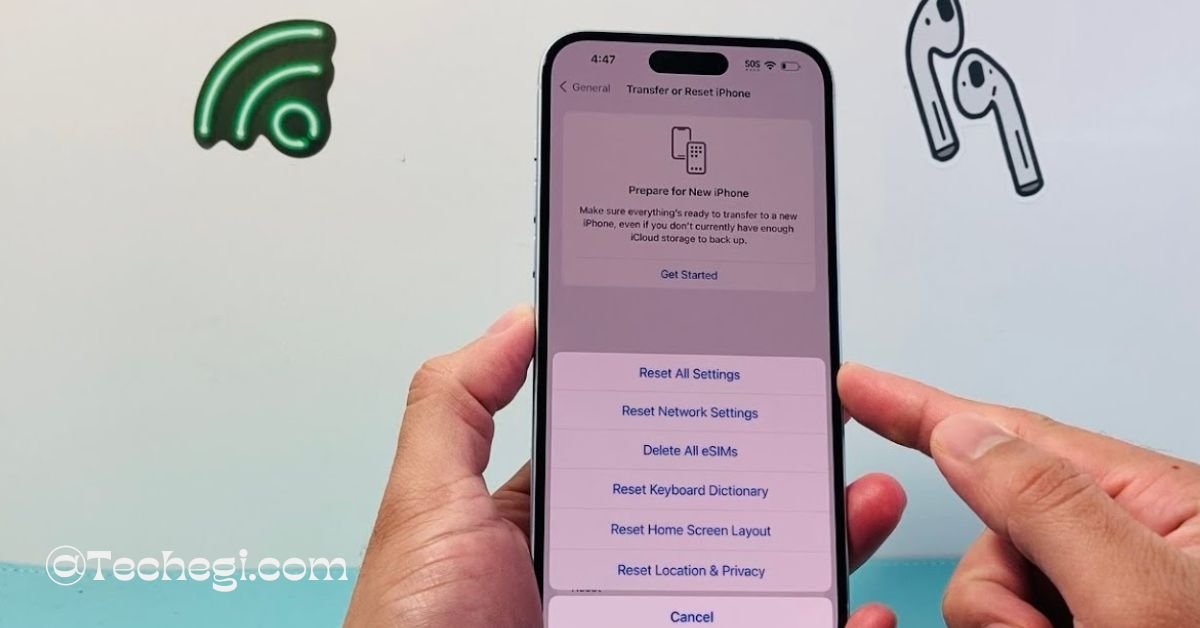
To hard reset most modern iPhones (iPhone 8 through iPhone 17), quickly press Volume Up, then Volume Down, then press and hold the Side/Power button until the Apple logo appears. For iPhone 7/7 Plus hold Volume Down + Sleep/Wake.
For iPhone 6s and earlier hold Home + Sleep/Wake. A hard reset (force restart) reboots the device without erasing your data and is the first fix for frozen screens and unresponsive apps.
Quick overview – what you’ll learn
This guide explains:
- Exact button sequences for every iPhone model (iPhone 6s → iPhone 17)
- How hard reset differs from restart, factory reset, Recovery Mode, and DFU Mode
- What to do if a hard reset doesn’t work (Recovery, DFU, restore)
- Causes of repeated freezes and how to prevent them
- Mistakes to avoid and safety tips
- Helpful troubleshooting flow
1. What is an iPhone hard reset – in plain words
A hard reset (also known as a force restart or force reboot) forcibly restarts an iPhone by cutting power to running processes and rebooting the device. It is used when the iPhone is frozen, unresponsive, or stuck on a black/apple logo screen. Important: a hard reset does not erase your personal data (photos, messages, apps). It simply restarts the device’s operating system.
2. When to use a hard reset (and when not to)
Use a hard reset when:
- Your iPhone screen is frozen or unresponsive.
- Apps won’t open or close.
- The device is stuck during boot (Apple logo hangs).
- Touch input doesn’t register.
Don’t use a hard reset if:
- Your phone is updating iOS — interrupting an update can lead to problems. Wait at least 15–20 minutes if the update appears to be in progress.
- You’re trying to fix persistent data corruption or a hardware issue — a factory reset or professional help may be needed.
- You need to permanently erase the device (use factory reset or Erase All Content & Settings).
3. Button sequences – model-by-model (2025 coverage)
Cheat sheet (one-line):
iPhone 8–17: Volume Up → Volume Down → Hold Side/Power until Apple logo.
iPhone 7/7 Plus: Hold Volume Down + Sleep/Wake.
iPhone 6s & earlier: Hold Home + Sleep/Wake.
iPhone 8, X, XR, 11, 12, 13, 14, 15, 16, 17 (and Pro / Pro Max models)
- Quickly press and release Volume Up.
- Quickly press and release Volume Down.
- Press and hold the Side/Power button until the Apple logo appears, then release.
Tip: Don’t hold Volume buttons for too long — you must press them quickly in sequence, then hold the Side button.
iPhone 7 and iPhone 7 Plus
- Press and hold Volume Down.
- While holding Volume Down, press and hold the Side (Sleep/Wake) button.
- Keep holding both buttons until the Apple logo shows, then release.
iPhone 6s, SE (1st gen), and earlier (Home-button models)
- Press and hold the Home button.
- While holding Home, press and hold the Sleep/Wake (Top or Side) button.
- Keep holding until the Apple logo appears, then release.
4. What happens after a hard reset
- The iPhone will shut down and reboot.
- Running apps are terminated unsafely — unsaved progress in open apps may be lost.
- The lock screen, Face ID, Touch ID, and passcode protections remain in place — hard reset does not bypass security.
- If issues persist after restart, the problem is likely deeper (software or hardware) and needs further action.
5. Hard reset vs Recovery Mode vs DFU Mode vs Factory Reset
Understanding differences prevents mistakes.
Restart (soft reset)
- Normal shutdown and boot via on-screen slider or Settings.
- Safest first step for minor issues; preserves app states.
Hard reset (force restart)
- For frozen or unresponsive devices.
- Does not erase user data.
Recovery Mode
- Use when iPhone won’t boot normally or update fails.
- Connect to a computer (Finder on macOS Catalina+, iTunes on older macOS/Windows) and choose Update or Restore. Can lead to data loss if you restore.
DFU Mode (Device Firmware Update)
- The deepest restore mode — reinstalls firmware and OS.
- Use when Recovery Mode fails. Requires a computer and can erase device.
Factory Reset (Erase All Content & Settings)
- Wipes device back to factory state. Use before selling or if persistent software problems demand a fresh start. Requires Apple ID password if Activation Lock is on.
6. If hard reset doesn’t work: step-by-step next moves
- Charge your iPhone for at least 15–30 minutes, then try again (battery may be drained).
- Try Recovery Mode (connect to Mac/PC):
- For iPhone 8 and later: force restart sequence but keep holding Side button until Recovery Mode screen appears, then connect to Finder/iTunes.
- Choose Update first (tries to reinstall iOS without erasing data). If Update fails, choose Restore (erases device).
- Bold anchor for external link suggestion: Apple Support: Use Recovery Mode on iPhone.
- For iPhone 8 and later: force restart sequence but keep holding Side button until Recovery Mode screen appears, then connect to Finder/iTunes.
- Try DFU Mode if Recovery Mode fails (advanced — follow exact steps for your model). DFU often fixes deeper firmware issues but will erase device. Bold anchor for external link suggestion: DFU Mode instructions.
- Contact Apple Support or visit an Apple Authorized Service Provider if hardware damage (liquid, dropped phone) is probable.
7. Why your iPhone keeps freezing – real causes and fixes
Understanding root causes helps prevent repeated resets.
1. Low storage space
When internal storage nears capacity, iOS can struggle to manage cache and background tasks.
Fix: Backup and delete large unused files or apps. Use iCloud or third-party tools to offload media.
2. Outdated iOS or buggy app
Old iOS or a misbehaving app can cause repeated crashes.
Fix: Update iOS (Settings > General > Software Update) and update or delete offending apps.
3. Background processes and excessive widgets
Too many background tasks or misconfigured widgets can cause CPU strain.
Fix: Remove unnecessary widgets, close unused apps, disable background app refresh for heavy apps (Settings > General > Background App Refresh).
4. Faulty app updates or corrupted app data
Sometimes an app’s data corrupts and causes system instability.
Fix: Offload the app (Settings > General > iPhone Storage > select app > Offload App) and reinstall.
5. Hardware problems
Liquid damage, defective battery, or board issues cause random freezes.
Fix: See Apple Support; hardware repair may be needed.
8. Force restart without working hardware buttons
If physical buttons are broken:
- Let the battery drain fully and then charge; the device will start normally when enough charge is present.
- Use AssistiveTouch (Settings > Accessibility > Touch > AssistiveTouch) to simulate power options — but AssistiveTouch cannot perform a force restart. It can help with regular restart only.
9. Mistakes to avoid during hard resets
- Don’t force restart during an iOS update in progress unless it’s been stuck a long time (30+ minutes) — interrupting an update can cause boot problems.
- Don’t assume hard reset will fix hardware problems. Repeated hard resets could mask an underlying failing component.
- Don’t perform DFU or restore without backups if data is important.
- Don’t use sketchy tools or websites promising to bypass activation locks — these are often scams.
10. Preventive maintenance to reduce freezes
- Keep iOS up to date.
- Keep at least 10–15% free storage (ideally 20%+).
- Remove unused apps and heavy widgets.
- Restart the phone once a week.
- Use Apple-certified chargers and cables to avoid charging-related glitches.
- Regularly back up (iCloud or local backup to Mac/PC).
11. Backups – make a habit before troubleshooting
Backups protect you from data loss when deeper fixes are needed.
- iCloud Backup: Settings > [your name] > iCloud > iCloud Backup > Back Up Now.
- Mac/PC Backup: Connect to Finder/iTunes and choose Backup Now.
- Third-party backup tools: If you prefer more control, consider trusted tools for local backups.
12. Advanced – Using Recovery Mode and DFU Mode (detailed)
If standard steps fail, these modes are next.
Recovery Mode (safer than DFU)
- Connect iPhone to computer.
- Put iPhone into Recovery Mode using the force restart sequence for your model but keep holding until you see the Recovery Mode screen (cable + laptop icon or “Connect to computer” image).
- Finder/iTunes will prompt to Update or Restore. Choose Update first.
DFU Mode (use only if Recovery fails)
- DFU is model-specific and requires precise timing. It bypasses the bootloader and reinstalls firmware. It will erase the device. Follow exact step-by-step instructions for your iPhone model or see Apple’s documentation.
13. Real-life scenarios – examples and what to do
Scenario A — App freezes during game: Try to force close the app (swipe up in App Switcher). If the phone is unresponsive, perform a hard reset.
Scenario B — Stuck during iOS update: Wait 30–60 minutes first. If no change, try Recovery Mode via computer.
Scenario C — Black screen after drop: Charge the phone 15–30 minutes and force restart. If still black, seek service — hardware damage likely.
14. Safety & security notes
- Hard reset does not remove Activation Lock (Apple ID). If you plan to sell a device, perform a factory reset and remove Activation Lock by signing out of iCloud.
- Never share your Apple ID or passcode with unverified technicians.
- Use official Apple repair providers to avoid voiding warranty.
15. Helpful checklist – Quick reference (printable)
- Try normal Restart → If not working: Hard Reset (follow model steps) → If still frozen: Charge 15–30 min and try again → If stuck at boot: Recovery Mode (Update first) → If Recovery fails: DFU Mode or visit support → Always keep recent backup.
16. FAQ – iPhone Hard Reset
Does hard reset delete iPhone data?
No, a hard reset (force restart) does not delete saved data. Unsaved app state may be lost.
Can a hard reset fix battery drain?
It can temporarily stop a runaway process causing drain, but it won’t repair battery health. Check Settings > Battery and consider battery replacement if health is low.
Will a hard reset bypass passcode or Face ID?
No. Security remains active. After reboot you still need to authenticate.
How long does a hard reset take?
Usually 30–90 seconds; if iPhone is severely unresponsive it may take a few minutes to boot.
Why does my iPhone keep restarting after a hard reset?
This suggests a software loop or hardware problem. Try Recovery Mode, reinstall iOS via Finder/iTunes, or get hardware diagnostics at Apple.
Is DFU or Recovery Mode safer?
Recovery Mode is safer because you can try Update before a destructive Restore. DFU is deeper and typically used as a last resort.
17. Final thoughts
A hard reset is a quick, safe, and essential tool for everyday iPhone troubleshooting. It solves most temporary freezes and unresponsive apps without deleting data. However, if problems persist, follow the escalation steps in this guide (Recovery, DFU, restore) and always maintain up-to-date backups. If you suspect hardware damage, contact Apple or an authorized service provider.