

Introduction: Defining Mobile Cars
The concept of “mobile cars” represents a revolutionary fusion of automotive technology and digital mobility. More than just traditional vehicles, mobile cars are equipped with advanced mobile integration, enabling smartphones to unlock and start engines, providing mobile charging solutions for electric vehicles (EVs), and operating within digital ecosystems like Mobility as a Service (MaaS). As technology transforms how we commute, mobile cars are setting the standard for convenience, sustainability, and interconnectivity.
From 5 G-enabled smart cars to on-the-go EV charging solutions, this new era prioritizes mobility over ownership and digital access over mechanical control. Whether it’s a smartphone acting as your car key or software updates delivered over the air, mobile cars are no longer a futuristic vision—they’re today’s reality. This article explores every facet of mobile cars and their growing importance in shaping how we move in a connected world.
Smartphone as Car Key: The Rise of Mobile Unlocking
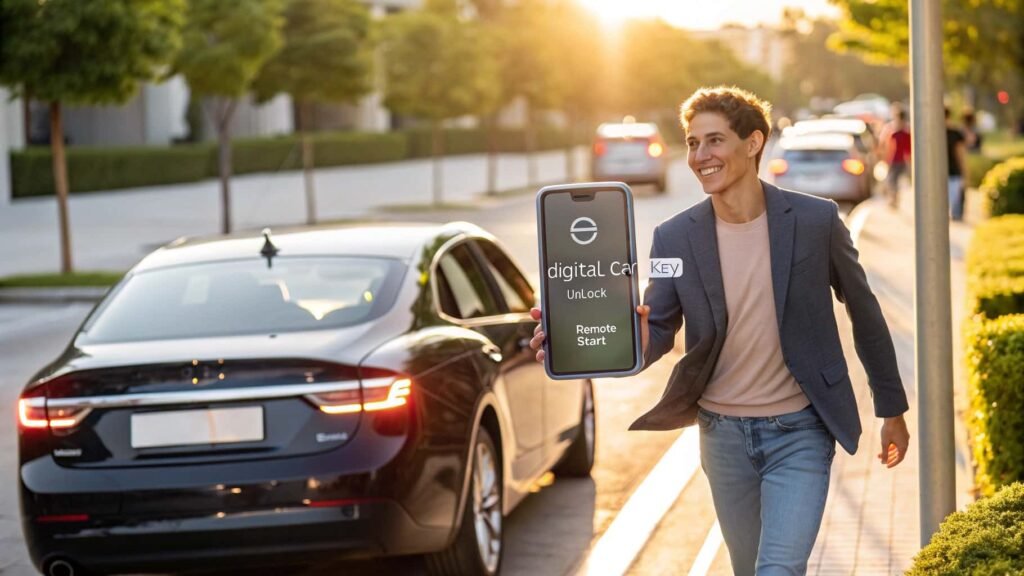
One of the most notable features driving mobile cars into mainstream use is the smartphone-as-key functionality. This allows drivers to unlock, start, and manage their cars using mobile devices like smartphones and smartwatches. It’s a concept that’s not only futuristic but immensely practical, especially for those who value seamless digital integration in everyday life.
With mobile key systems, traditional key fobs are becoming obsolete. Instead, users can unlock and start their cars by simply approaching with a phone in their pocket. Leading automotive and tech companies, including Apple, Google, and various auto manufacturers, have collaborated to make this transition smoother and more widely adopted.
The appeal lies in convenience and security. Digital keys can be shared remotely, which is ideal for families or car-sharing services. Users can also set access limitations, making it easier to control who drives and when. These mobile key systems are encrypted, ensuring a secure connection between the device and vehicle. As this trend continues, it redefines how we perceive car ownership and access.
Apple Car Keys Overview & Brand Expansion
Apple has been at the forefront of this transformation with its Car Keys feature, integrated into the Apple Wallet. Initially launched in partnership with BMW, this technology has rapidly expanded to include 33 brands, including Cadillac, Chevrolet, Hyundai, Mercedes-Benz, and Porsche.
The Apple Car Keys function allows users to store a digital car key on their iPhone or Apple Watch. Once stored, it enables locking, unlocking, and starting the vehicle, all from a distance. Furthermore, Apple’s implementation offers users the ability to share keys via iMessage—a feature designed with families, friends, and ride-sharing in mind.
Another key advantage of Apple’s technology is ultra-wideband (UWB) support. This enhances proximity features, ensuring more accurate and secure device-to-car communication. Vehicles can detect your phone from within your bag or pocket and unlock doors automatically. Apple continues to work closely with auto manufacturers to bring this feature to more models, making mobile cars increasingly mainstream.
Features: Proximity, Passive Entry, Remote Start
Digital car keys bring several high-tech functionalities that elevate user convenience. Three standout features include:
1. Proximity Detection
Cars can automatically unlock as the smartphone or smartwatch approaches. UWB and Bluetooth Low Energy (BLE) technologies ensure this process is fast and secure, even if the phone is in a pocket or bag.
2. Passive Entry and Start
With passive entry, drivers don’t need to press a button or remove their phone. The car detects the authorized device and grants access. Once inside, passive start allows ignition at the push of a button without needing to physically handle the key or phone.
3. Remote Access & Sharing
Users can remotely lock, unlock, and start the vehicle from a distance. They can also share temporary keys via messaging apps, enabling remote control and collaborative vehicle use, particularly useful for services like Turo or carpooling among family members.
Together, these features make mobile cars a hallmark of modern vehicle accessibility and smart living.
Mobile Charging for EVs: Power on the Move
Mobile charging is another innovative feature that defines the modern mobile car ecosystem. Traditional charging stations are fixed, limiting flexibility, especially in underserved or rural areas. Enter mobile EV charging units—compact, transportable stations that bring the power to the car.
Volkswagen, for instance, has introduced mobile charging stations with a capacity of 360 kWh. These stations can fully charge most electric vehicles in under 20 minutes. More importantly, they are modular and grid-independent, meaning they can be deployed anywhere, from urban centers to off-grid locations.
These mobile chargers not only extend the usability of EVs but also reduce the anxiety associated with limited infrastructure. As governments and automakers push for electric mobility, such mobile solutions are critical in filling the current infrastructure gaps and preparing for mass EV adoption.
VW’s Mobile 360 kWh Charging Stations
Volkswagen’s mobile chargers are game-changers for both urban and rural EV users. With 360 kWh storage capacity and DC fast-charging capabilities, they deliver up to 100 kW charging power per session.
Key features include:
- Grid-independent operation: Can work without a fixed power supply
- Fast-charging: 0–80% charge in under 17 minutes
- Relocatable: Easily moved and deployed at events, parking lots, or emergency areas
These units are especially helpful in remote or underserved areas where installing permanent infrastructure isn’t feasible. They provide an essential bridge solution as the world shifts toward full electric mobility.
Benefits: Fast Charge, Fills Gaps, Supports EV Uptake
Mobile charging stations come with a wealth of benefits, making them an integral component of mobile cars:
- Speed: Rapid charging capabilities significantly reduce wait times
- Convenience: Power is brought to the user, not the other way around
- Scalability: Ideal for temporary events, fleet services, or emergencies
- Increased EV Confidence: Helps reduce range anxiety among new adopters
As EVs become the norm, mobile charging solutions support a smooth transition and open doors to wider adoption.
Mobility as a Service: The Mobile Cars Ecosystem
Mobility as a Service (MaaS) is transforming the transportation sector by offering flexible, integrated travel solutions through digital platforms. Instead of owning a vehicle, users can plan, book, and pay for multiple forms of transport—mobile car wash, scooters, buses—through one app.
Mobile cars are central to this evolution. Their integration into MaaS platforms ensures they can be used on demand, without the complexities of traditional car ownership. These services are especially appealing in dense urban environments where parking and maintenance can be burdensome.
By combining mobile technology, vehicle connectivity, and on-demand access, MaaS redefines convenience. Users benefit from cost savings, environmental friendliness, and better utilization of shared mobility options.
Integrated Platform Approach: Apps, Multi-modal, Subscription Models
MaaS platforms function through intuitive apps that integrate various transportation options:
- Multi-modal planning: Combines mobile car wash near me, e-bikes, and public transit into a single journey
- Subscription models: Offers tiered access to vehicles with flexible pricing
- Seamless transactions: One-click booking, digital payments, and usage tracking
Popular platforms like Whim, Moovit, and Uber already incorporate mobile cars in their service offerings. This evolution makes mobile cars not just a mode of transport, but a flexible service.
Connection to Electric, Autonomous, Connected Vehicles
Mobile cars are inherently linked to other innovations:
- Electric Vehicles (EVs): Often the core of MaaS fleets due to low emissions and running costs
- Autonomous Cars: Enhance MaaS by reducing operational costs and improving safety
- Connected Cars: Enable real-time data sharing, predictive maintenance, and improved routing
Together, these elements create a comprehensive smart mobility ecosystem, where the vehicle is just one part of a digital transportation network.
Cars as Smart Devices: Connected & Cloud-Based Mobiles
Today’s mobile cars are often described as “smartphones on wheels.” With advancements in 5G, cloud computing, and software-defined vehicle architecture, modern cars are becoming more like high-tech gadgets than mechanical machines.
Over-the-air (OTA) updates allow automakers to roll out new features and security patches just like smartphone updates. This means your car can get better over time without ever visiting a service center.
Tesla pioneered this approach, but others like BMW, Ford, and Mercedes-Benz are rapidly catching up. Their latest models come equipped with built-in internet connectivity, app integration, and voice control.
5G, OTA Updates, Software-Defined Vehicles (Tesla, BMW iX)
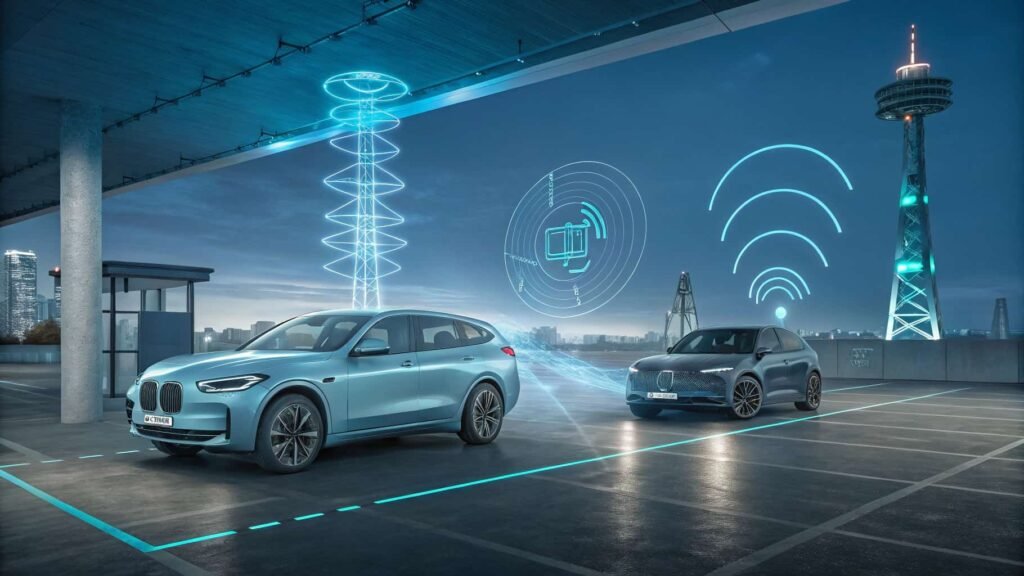
Let’s take a closer look:
- 5G Connectivity: Enables real-time navigation, enhanced safety alerts, and entertainment streaming
- OTA Updates: Pushes software improvements remotely, reducing service costs
- Software-Defined Vehicles: Centralized computing controls everything from infotainment to driving dynamics
BMW iX, for example, is one of the first vehicles in the U.S. with full 5G capabilities, supporting ultra-fast data processing and cloud access. This positions mobile cars as part of the digital economy, not just the transportation industry.
Advantages & Limitations of Mobile Cars
Advantages
- Convenience: Seamless access via smartphones and apps
- Sustainability: Encourages EV adoption and shared usage
- Cost Efficiency: Subscription models lower ownership expenses
- Safety: Enhanced diagnostics, navigation, and driver aids
Limitations
- Security Risks: Potential for hacking or unauthorized access
- Tech Dependence: Requires constant connectivity and device compatibility
- Infrastructure Gaps: Mobile car detailing near me services may vary by region
- High Initial Cost: Smart and EV features can increase the vehicle price
While mobile cars offer a glimpse into the future, challenges remain in infrastructure, cybersecurity, and affordability. Yet, these hurdles are surmountable as adoption grows.
What’s Next? Trends & Predictions
The mobile car revolution is still unfolding. Here’s what we can expect in the coming years:
- Expanded Smartphone Integration: More brands are adopting digital key features
- Wider EV Charging Networks: Both mobile and fixed stations are growing rapidly
- Fully Autonomous Fleets: MaaS companies launching driverless services
- V2X Communication: Cars communicating with infrastructure, other vehicles, and grid systems
- Green Smart Cities: Integration with public transport, bike lanes, and renewable power
- Used mobile cars and Mobile cars for sale near me becoming popular alternatives for budget-conscious consumers
These trends highlight the shift toward intelligent mobility solutions that prioritize efficiency, user control, and sustainability. Mobile cars are more than a convenience—they are a cornerstone of tomorrow’s urban infrastructure.
Conclusion: Embracing a Mobile Car’s Future
Mobile cars are revolutionizing how we interact with vehicles. From unlocking cars with a phone to charging them on the move, every innovation points to a more connected, efficient, and sustainable future. As the automotive and tech industries converge, mobile cars offer a smarter alternative to traditional transportation. With their growing presence in both personal and shared mobility, mobile cars are redefining travel, and the road ahead looks promising.
FAQ’s
1. What does it mean when a car is mobile?
It means the car can move or is capable of being driven; it’s not fixed in one place.
2. Are mobile cars more expensive than traditional cars?
While mobile cars, especially EVs and smart models, can have a higher upfront cost, they often save money long-term through lower fuel, maintenance, and insurance costs, especially under subscription or MaaS models. For buyers on a budget, options like cars for sale in Mobile, AL, under $3,000 or used cars in Mobile, AL, under $10,000 are increasingly available.
3. What is the cheapest manufactured car?
As of now, the Chevrolet Spark and Mitsubishi Mirage are among the cheapest new cars manufactured globally.
4. Can I use mobile car keys on Android devices?
Yes. While Apple Car Keys is iOS-specific, Google is developing similar Android-compatible digital key solutions. Compatibility depends on the car manufacturer and phone model.
5. How safe are mobile cars from hacking?
Mobile cars use encrypted channels, biometric verification, and secure APIs to minimize hacking risks. Still, like any connected device, keeping software up to date is crucial for security.
6. What happens if my phone battery dies and it’s my car key?
Most systems include backup options like PIN entry, emergency mechanical keys, or alternative access via smartwatch or cloud login.
7. What is the best online car buying site?
Top sites include Carvana, Autotrader, Cars.com, and Vroom, known for wide selections and easy financing options.
8. Where can I find affordable mobile cars for sale?
You can explore listings for Cash cars Mobile, AL, Mobile cars for sale, or even cars for sale in Mobile, AL under $4,000. These platforms offer a variety of used cars for Mobile, AL buyers can compare and choose from.
9. Is buying a mobile home the same as buying a car?
No. While both are titled property, buying a mobile home involves more paperwork, financing steps, and zoning laws, similar to real estate in many cases.
Also read:
- Mode Mobile Stock: Symbol, Price & IPO Forecast 2025!
- How To Fix Inbox Locked On FC Mobile– Easily!
- Mobile Data Terminal: Features, Uses, and Benefits!