
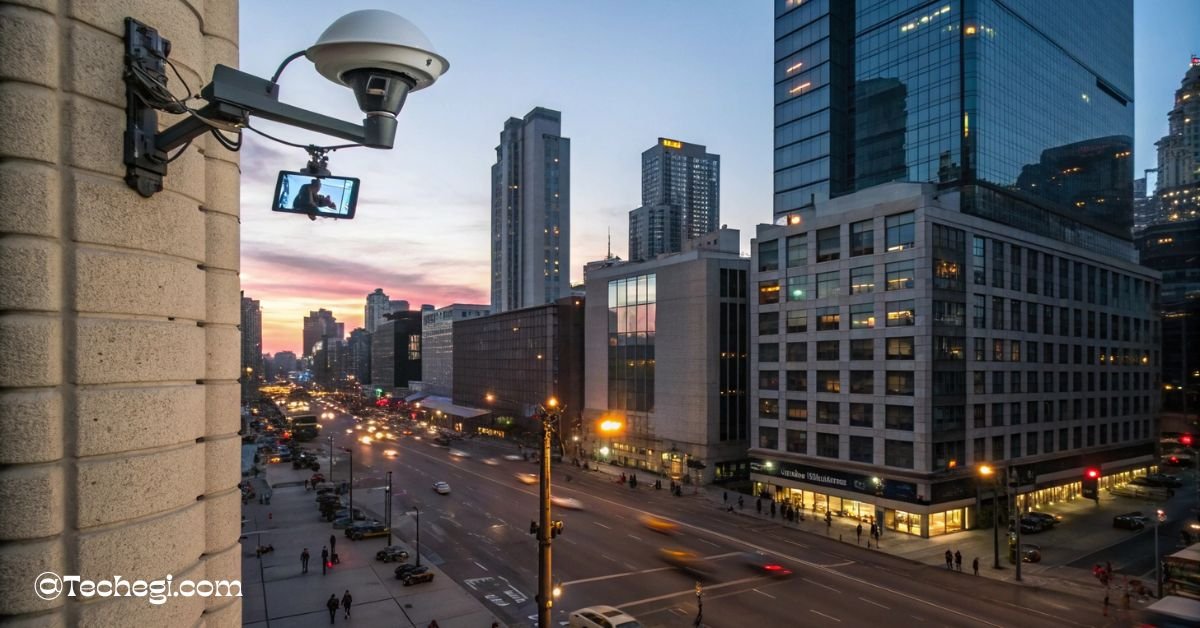
Surveillance can be performed through either stationary or mobile means, depending on the objective. Stationary surveillance uses fixed cameras or sensors to monitor specific areas, while mobile surveillance involves tracking targets using vehicles, drones, or on-foot observers. Combining both offers complete, flexible security coverage.
Stay tuned with us as we dive deeper into how surveillance can be performed through either stationary or mobile means. From fixed cameras to mobile tracking units, we’ll explore the tools, techniques, and real-world uses that shape modern surveillance.
What Is Surveillance?
Surveillance is the process of monitoring behaviour, activities, or information to gather intelligence and assess potential threats. It serves a wide variety of purposes—ranging from crime prevention and national security to employee productivity monitoring and personal protection. Surveillance can be either overt (visible) or covert (hidden), depending on the objective and setting.
The core function of surveillance is to gather actionable information without alerting the subject. This makes it indispensable in law enforcement, corporate risk management, cybersecurity, and even military operations. Surveillance tools may include cameras, audio recorders, GPS devices, or human observers trained to detect anomalies or suspicious behaviour.
With advancements in technology, surveillance now extends into digital environments as well. Cyber surveillance tracks online activity, while biometric systems identify individuals through facial recognition or fingerprint scanning.
However, the practice must be balanced with privacy rights and legal standards. Unauthorized or excessive surveillance can breach ethical boundaries and lead to significant legal consequences. That’s why professionals must always consider the method they choose. Understanding that surveillance can be performed through either stationary or mobile means is the foundation of developing a responsible, effective, and compliant monitoring strategy.
Understanding the Two Main Types of Surveillance
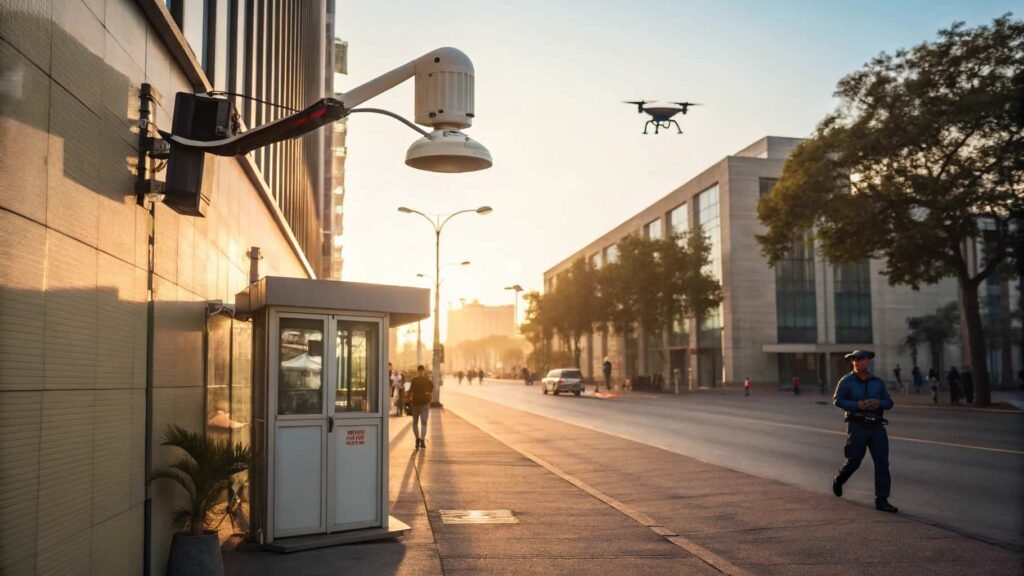
Surveillance generally falls into two primary categories: stationary and mobile. These categories define how the monitoring is carried out and the kind of equipment or personnel required.
Stationary surveillance involves fixed-point observation. This includes surveillance cameras mounted on buildings, sensors installed at entry points, or personnel stationed at observation posts. It provides continuous coverage of a specific area, ideal for long-term monitoring or securing physical spaces like banks, airports, or warehouses.
Mobile surveillance, on the other hand, involves tracking a subject’s movements in real time. This could be done using vehicles, drones, or by following someone on foot. Mobile surveillance is highly adaptable and is often used in criminal investigations, private investigations, and operations that require shadowing a moving target.
These two methods are not mutually exclusive. In many cases, they are combined to create a hybrid strategy. For instance, a store might have stationary cameras watching the entrance, while mobile plainclothes officers monitor shoplifters inside. Recognizing that surveillance can be performed through either stationary or mobile means helps investigators deploy resources strategically, balancing thoroughness and flexibility.
Stationary Surveillance: Features, Tools, and Use Cases
Stationary surveillance refers to monitoring from a fixed point, typically using mounted or installed devices. This method is foundational in public and private security, offering constant observation over designated spaces without requiring operator movement. Its strength lies in persistence, allowing for 24/7 coverage of entrances, high-traffic areas, or critical infrastructure.
Common tools include CCTV cameras, motion detectors, thermal imaging, and hidden cameras. These devices can be discreet or highly visible, depending on whether the goal is deterrence or covert monitoring. Many modern systems are equipped with remote access, real-time streaming, and AI-based analytics for automatic anomaly detection.
Stationary surveillance is ideal for monitoring:
- Building entrances and exits
- Parking lots
- Retail stores
- Government facilities
- Industrial warehouses
The benefits include cost-effectiveness, low maintenance, and the ability to store high volumes of recorded footage. However, its fixed nature can be a limitation—it cannot follow suspects or respond to changing environments. That’s where mobile surveillance complements its weaknesses. Understanding how surveillance can be performed through either stationary or mobile means allows for better deployment of assets and layered defence strategies.
Mobile Surveillance: Techniques, Tools, and Best Practices
Mobile surveillance involves following and observing a subject across multiple locations using various platforms—on foot, in vehicles, or via unmanned aerial systems (drones). It is a dynamic and versatile method, especially useful in investigative contexts where targets are on the move or intentionally avoiding detection.
Techniques include:
- Foot surveillance, often used in crowded or urban areas
- Vehicle tailing, where the target is tracked discreetly by car
- Aerial drone tracking, providing bird’s-eye views
- Public transport shadowing, a method used in cities
Mobile surveillance relies on sophisticated tools such as GPS trackers, covert cameras, body-worn devices, and communication systems that allow teams to remain coordinated while tracking a subject.
This type of surveillance is often employed in:
- Law enforcement operations
- Insurance fraud investigations
- Infidelity or custody cases
- Corporate espionage monitoring
Despite its power, mobile surveillance requires skilled personnel, as the risk of detection is higher. It is resource-intensive and often governed by stricter legal constraints. Knowing that surveillance can be performed through either stationary or mobile means helps professionals choose the right strategy for the situation—whether a fixed watch or an adaptive pursuit.
Comparing Stationary and Mobile Surveillance
When evaluating surveillance approaches, it’s essential to compare stationary and mobile methods side-by-side to understand their unique advantages and limitations. Each serves different investigative needs, and the choice between them often comes down to the nature of the subject being monitored and the surveillance goals.
Stationary surveillance is ideal for:
- Monitoring specific locations 24/7
- Acting as a visual deterrent
- Capturing continuous video evidence
However, its limitations include:
- Inability to follow a moving target
- Potential blind spots
- Fixed angle of view
Mobile surveillance, on the other hand, offers:
- Flexibility to follow targets in real-time
- High adaptability to unexpected changes
- Opportunity for closer and more personal observation
But it also presents challenges:
- Requires trained surveillance teams
- Greater legal restrictions
- Higher cost and complexity
Combining both methods often yields the best results. Surveillance can be performed through either stationary or mobile means, but in high-stakes scenarios, a hybrid strategy that leverages the strengths of both can offer comprehensive coverage and improved outcomes.
How Surveillance Can Be Performed Through Either Stationary or Mobile Means
At the heart of any effective security operation lies the understanding that surveillance can be performed through either stationary or mobile means—or a combination of both. This hybrid approach is often the most effective way to gather intelligence and respond to real-time threats.
For example, a bank may use stationary surveillance like fixed CCTV to monitor customer behaviour and detect suspicious activity, while investigators might use mobile surveillance to follow individuals of interest after they leave the premises. This ensures there’s no lapse in coverage.
Professionals typically assess several factors to decide which method to use:
- The target’s behaviour (stationary or mobile)
- The environment (indoor, outdoor, urban, rural)
- Legal permissions
- Resource availability
In complex operations like undercover investigations or anti-terrorism efforts, both surveillance types are deployed simultaneously. This layered approach ensures both fixed areas and mobile entities are fully covered, leaving no blind spots in the surveillance net.
Understanding this flexibility is crucial for anyone designing or managing a surveillance operation. Knowing when to employ stationary tools versus mobile tracking—and when to blend them—can make the difference between success and failure.
Modern Technologies Enhancing Surveillance Capabilities
The field of surveillance has been revolutionised by cutting-edge technologies that increase accuracy, reduce human labour, and enhance real-time decision-making. These innovations are used in both stationary and mobile surveillance and are rapidly transforming how observation and monitoring are performed across industries.
In stationary surveillance, cameras are now equipped with AI-based facial recognition, license plate readers, and heat detection sensors. These features help identify individuals, count people, and detect threats automatically. Modern CCTV systems are also integrated with cloud storage and remote access, enabling real-time monitoring from any location.
In mobile surveillance, GPS trackers provide exact location data, while body-worn cameras and mobile command vans allow for remote coordination. Drones offer aerial views with capabilities such as zoom, night vision, and live video feed, making them indispensable in terrain where humans cannot follow.
One emerging trend is the use of Internet of Things (IoT) devices, which connect sensors and cameras for synchronised action. These smart surveillance networks ensure seamless communication between mobile and stationary elements.
Ultimately, whether deployed in fixed or mobile setups, modern technology allows for smarter, faster, and more scalable surveillance. Recognising that surveillance can be performed through either stationary or mobile means, and enhanced with tech, is key to staying ahead of evolving threats.
Legal and Privacy Implications
Surveillance practices, while essential, come with serious legal and ethical responsibilities. Different regions around the world enforce varying regulations on how surveillance can be conducted, especially when it involves private individuals or sensitive data. Whether using stationary or mobile methods, it’s vital to operate within the bounds of the law.
In most jurisdictions, stationary surveillance—such as security cameras in public areas—is legal, especially when signage is provided. However, hidden cameras in private areas (like bathrooms or private offices) are typically prohibited without consent.
Mobile surveillance, such as tailing a person or using GPS trackers, is more legally complex. Many regions require a court order or warrant, particularly when surveillance infringes on personal privacy. Recording audio or video without permission can also lead to legal consequences.
Furthermore, laws such as the General Data Protection Regulation (GDPR) in Europe or the California Consumer Privacy Act (CCPA) in the U.S. establish clear guidelines for data handling, storage, and transparency.
The ethical aspect involves asking: Is the surveillance necessary? Is it proportionate? Professionals must weigh the security benefits against the potential infringement of privacy. Whether surveillance is stationary or mobile, understanding legal boundaries ensures compliance and public trust.
Surveillance in Different Industries
Surveillance is not limited to one domain—it spans across various industries, each applying it differently based on their unique risks and operational needs. Knowing that surveillance can be performed through either stationary or mobile means allows organisations to tailor strategies accordingly.
In law enforcement, surveillance is a key tool for preventing crimes, tracking suspects, and gathering evidence. Officers may use fixed cameras to monitor public areas or deploy mobile teams during investigations or undercover operations.
Corporate environments use stationary cameras to protect assets, deter employee misconduct, and monitor supply chain security. In some high-risk industries like pharmaceuticals or tech, mobile surveillance may be used to monitor unauthorised information sharing.
Private investigation firms routinely employ mobile surveillance techniques to investigate fraud, infidelity, or personal injury claims. Foot surveillance, GPS tracking, and drone monitoring are common tools in their toolkit.
In residential settings, homeowners use stationary systems like doorbell cameras and motion sensors. Some neighbourhood patrol groups enhance this with mobile rounds, effectively combining both methods to ensure community safety.
Each industry adapts surveillance based on budget, threat level, and legal framework, showing just how flexible and widespread these techniques have become.
How to Choose Between Stationary or Mobile Surveillance
Choosing the appropriate surveillance method depends on a variety of practical and strategic factors. Whether for a business, investigation, or personal protection plan, deciding between stationary and mobile surveillance—or using both—requires a thoughtful approach.
First, identify the goal: Is it to protect a fixed location, or to track someone’s movements? Stationary systems are best for constant monitoring of places like entrances, storage rooms, or parking lots. Mobile surveillance is more suitable when the subject or threat is in motion.
Next, consider the location and environment. Urban areas might offer cover for mobile teams, while rural areas might benefit more from long-range stationary cameras or drones.
The budget is also a factor. Stationary systems usually require a one-time investment in equipment and installation. Mobile surveillance, however, involves ongoing costs for personnel, fuel, equipment maintenance, and possible legal filings.
Legal compliance is critical. Mobile tracking often requires special authorisation, especially when used against individuals in non-public spaces.
When executed correctly, a hybrid approach delivers maximum effectiveness. Professionals often begin with stationary monitoring and escalate to mobile tracking as the situation evolves.
Real-Life Examples of Effective Surveillance
Real-world examples clearly illustrate how surveillance can be performed through either stationary or mobile means for impactful results across sectors.
In 2023, a multinational corporation detected internal fraud through a mix of stationary office cameras and mobile surveillance on an employee suspected of data theft. Cameras revealed unusual activity, while tailing confirmed after-hours meetings with competitors.
Another example comes from law enforcement. A fugitive case in Chicago involved a network of city-wide stationary cameras. Once the suspect was spotted entering a vehicle, mobile surveillance teams picked up the trail and successfully apprehended them without a public chase.
In insurance investigations, private detectives used GPS trackers (mobile) to observe a claimant’s movements, revealing inconsistencies with their reported disability. Meanwhile, stationary cameras at the individual’s residence captured them lifting heavy boxes, leading to a denied fraudulent claim.
Even in residential security, smart doorbell cameras (stationary) paired with neighbourhood patrols (mobile) have helped reduce break-ins in several U.S. suburbs by providing layered protection and instant communication with authorities.
These real-life stories show the importance of tailoring surveillance based on context and how combining both stationary and mobile techniques often leads to successful outcomes.
The Future of Surveillance
The future of surveillance lies in the seamless integration of stationary and mobile systems powered by intelligent technologies. We are witnessing a shift toward “smart surveillance,” where networks of devices communicate in real-time and adapt based on conditions and behavioural patterns.
Smart cities are the biggest adopters of this vision. With thousands of cameras and IoT sensors embedded across public infrastructure, stationary surveillance feeds data to centralised platforms. Simultaneously, mobile drones and automated vehicles perform patrols, respond to incidents, and track threats on the move.
The introduction of 5G networks accelerates this process, enabling low-latency data transmission between stationary and mobile systems. For instance, a fixed camera spotting a suspicious person could trigger an autonomous drone to follow the individual in real-time.
Privacy concerns are also shaping this future. Technologies are being developed with built-in compliance features, such as anonymising faces until a crime is detected, or automatically deleting non-relevant footage. The push for ethical AI ensures surveillance respects individual rights while enhancing safety.
Ultimately, the future proves what this article has emphasised: Surveillance can be performed through either stationary or mobile means, and tomorrow’s systems will blend both to create smarter, safer environments.
FAQ’s
Q1: Can surveillance be performed through stationary or mobile means?
Yes, surveillance can be done using fixed (stationary) tools like cameras or by mobile tracking using vehicles, drones, or personnel.
Q2: When you identify a possible surveillance attempt, should you handle the situation yourself?
No, you should not handle it yourself. Report it to security personnel or local authorities immediately.
Q3: Which is a possible indicator of a suspicious letter or package?
Excessive postage, strange odours, oily stains, or no return address are all signs of a suspicious package.
Q4: Which one of these is not a physical security feature when inspecting your hotel room?
A “Do Not Disturb” sign is not a physical security feature.
Final Thoughts: Why Surveillance Can Be Performed Through Either Stationary or Mobile Means
As we’ve explored throughout this guide, surveillance is a multifaceted discipline that plays a central role in modern security, investigations, and intelligence gathering. Understanding that surveillance can be performed through either stationary or mobile means is essential for selecting the right approach in any situation.
Stationary surveillance provides reliable, continuous observation of key locations, acting as both a monitoring and deterrent tool. Mobile surveillance, on the other hand, allows for flexibility and responsiveness, enabling investigators and security professionals to adapt to real-time changes and follow their targets wherever they go.
Both methods come with their own set of tools, techniques, legal concerns, and best practices. However, the most effective operations often use a hybrid approach, leveraging the stability of stationary systems with the agility of mobile ones.
As technology continues to evolve, so will the capabilities of both forms of surveillance. From AI-enhanced recognition to real-time tracking drones, the line between fixed and mobile monitoring will blur, creating smarter and more efficient systems.
Whether you’re securing a home, protecting a company, or conducting an investigation, remember this core truth: the right surveillance strategy starts with understanding the power and purpose of both stationary and mobile means.
Also read:
- Aluis Mobile Car Detailing: Expert Service at Your Doorstep!
- T-Mobile 5G Advanced Pixel FOMO: Why Pixels Miss Out!
- T-Mobile Subscriber Additions Miss Estimates: What’s Next?!