
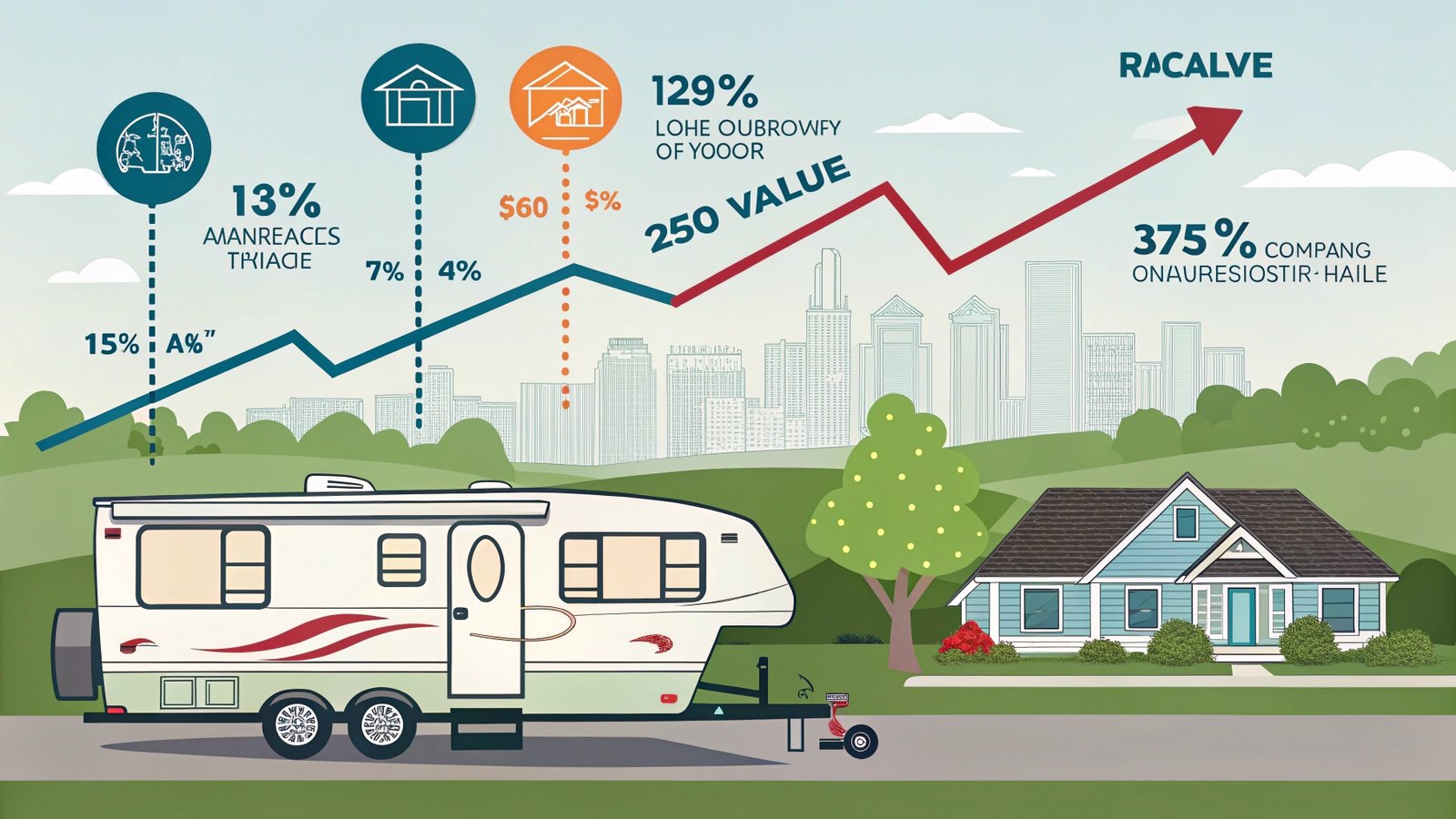
Mobile homes can depreciate like vehicles if they’re placed on rented land or poorly maintained. But modern manufactured homes on owned land often hold or even gain value like traditional houses. The key factors are location, land ownership, and upkeep.
Stay tuned with us as we dive deep into the big question: do mobile homes depreciate? — uncovering what impacts their value, from land ownership to location and everything in between.
What Is a Mobile Home, and How Does It Differ from a Manufactured Home?
The terms “mobile home” and “manufactured home” are often used interchangeably, but there’s a legal distinction.
- Mobile homes technically refer to factory-built homes constructed before June 15, 1976, when the U.S. Department of Housing and Urban Development (HUD) introduced federal building standards.
- Manufactured homes are those built after that date, adhering to strict HUD codes for safety, energy efficiency, and quality.
While older mobile homes can depreciate faster due to age or outdated construction, modern manufactured homes often hold value better and, in some cases, even appreciate, especially if they’re placed on owned land.
Why Do People Think Mobile Homes Depreciate Like Cars?
Many people assume mobile homes depreciate the moment they’re “driven off the lot,” just like a new car. This belief comes from the fact that mobile homes are factory-built and often treated as personal property (chattel) rather than real estate.
But the comparison isn’t entirely accurate. While older mobile homes placed in rental communities might lose value, manufactured homes attached to land and built to HUD standards often follow the same appreciation patterns as traditional houses.
The “car depreciation myth” persists, but today’s market tells a more complex story.
Do Mobile Homes Depreciate or Appreciate Over Time?
So, do mobile homes depreciate or appreciate? The short answer is: it depends.
If the home is older, poorly maintained, or located in a declining area, it will likely depreciate. But modern manufactured homes, particularly those on owned land, can appreciate—sometimes at rates similar to site-built houses.
Studies by the Federal Housing Finance Agency (FHFA) show that manufactured homes attached to land appreciate nearly 3–4% annually in some regions. This proves that mobile homes aren’t destined to lose value—they just need the right conditions.
What Does the Data (and Reddit Users) Say About Mobile Home Depreciation?
Beyond official reports, buyer experiences also shape perceptions. On Reddit threads like “do mobile homes depreciate Reddit” users share real-life stories that reveal both sides of the coin.
Some owners regret placing their home in a park with rising lot rents, watching resale values drop. Others proudly report that their manufactured homes on owned land gained tens of thousands of dollars in value over a decade.
This community insight mirrors the data: depreciation isn’t automatic—it depends on how, where, and when you buy.
What Factors Cause a Mobile Home to Depreciate or Appreciate?
Does Owning the Land Affect Whether a Mobile Home Depreciates?
Land ownership is the single biggest factor. If your mobile home sits on rented land in a park, buyers see the structure as temporary, and lenders treat it as personal property. But if you own the land, the home is classified as real estate, instantly making it more attractive to buyers and banks, and far more likely to appreciate.
How Do Age, Condition, and Build Quality Impact Value?
Like any home, condition matters. A well-maintained manufactured home built to HUD standards will hold value much better than an aging single-wide with deferred maintenance. Upgrades, fresh siding, and modern appliances all help preserve and grow value.
Does Location Play a Role in Mobile Home Value?
Yes—location is critical. A mobile home in a growing city or desirable school district may appreciate, while the same model in a declining rural area may depreciate quickly. Local zoning laws, park reputation, and access to amenities also matter.
How Does Financing Type Influence Depreciation?
If a mobile home is financed as a mortgage (real property), it’s often perceived as more stable and valuable. If financed as a chattel loan (personal property), buyers may view it more like a vehicle, which can contribute to depreciation stigma.
What Are the Risks of Buying a Manufactured Home?
While manufactured homes can be affordable and well-built, there are risks. Some buyers report that park rent increases eroded their savings. Others say their home depreciated faster because it wasn’t attached to land.
Risks of buying a manufactured home include:
- Difficulty securing traditional mortgages
- Lower resale demand in some areas
- Potential stigma among buyers
- Value is tied heavily to land status
Do Modular Homes Depreciate Like Mobile Homes?
This is a common confusion. Modular homes are NOT mobile homes—they’re built in sections in factories but assembled on permanent foundations to the same codes as site-built homes.
Because modular homes are legally considered real property from day one, they typically appreciate just like traditional homes, not like older mobile homes.
Are There Real‑World Examples of Mobile Homes Appreciating?
Absolutely. In regions like California, Florida, and Texas, manufactured homes on owned lots have seen substantial appreciation. One Iowa study even found that certain communities saw resale values rise over 30% in a decade.
The trend is clear: when land, location, and upkeep align, mobile homes can be smart investments, not guaranteed losses.
Can Tools Like a Manufactured Home Depreciation Calculator or Mobile Home Resale Value Calculator Help You Estimate Worth?
Yes. A manufactured home depreciation calculator or mobile home resale value calculator can provide ballpark figures for insurance, taxes, and resale pricing.
These tools consider:
- Age of the home
- Model and size (single-wide, double-wide)
- Current market conditions
- Location and land status
While they’re helpful, they don’t replace a professional appraisal, especially if the home is on owned land, where appreciation can dramatically change its value.
Do Some Buyers Regret Buying a Mobile Home?
Search “I regret buying a mobile home” online, and you’ll find mixed experiences.
Some owners regret park placement due to rising lot fees or stigma in resale markets. Others regret not buying land along with the home. But many buyers are satisfied, especially those who treated their manufactured home purchase as a long-term investment with thoughtful location and upkeep decisions.
How Does the IRS View Mobile Homes for Depreciation Purposes?
For tax purposes, the IRS classifies a mobile home as either:
- Personal property (if on rented land) – depreciated over shorter time frames (5–7 years for business use)
- Real property (if attached to land) – depreciated like a house, typically over 27.5 years if used as a rental property.
Understanding this classification helps owners know which tax deductions or investment benefits may apply.
What Are the Pros and Cons of Buying a Mobile Home?
Pros: Lower upfront costs, fast construction, energy efficiency, and potential appreciation when placed on land.
Cons: Financing challenges, stigma in some markets, and depreciation risk if not well-maintained or land isn’t owned.
How Can You Prevent Depreciation and Increase a Mobile Home’s Value?
Here’s how to protect and even grow value:
- Own the land (or convert title to real property).
- Maintain the home—fix leaks, replace siding, keep it modern.
- Upgrade wisely—kitchens, bathrooms, and porches improve appeal.
- Choose location carefully—avoid declining areas or unstable parks.
Are Mobile Homes a Good Long‑Term Investment?
Mobile homes can be great long-term investments—if you play it smart. Buying a modern manufactured home on owned land, maintaining it, and treating it like real estate can lead to appreciation, equity growth, and stable housing for decades.
FAQ’s
1. Is a mobile home a bad investment?
Not necessarily. A mobile home can be a smart investment if it’s placed on owned land, maintained well, and purchased in a growing area. Homes in declining parks or without land ownership are more likely to lose value.
2. Do mobile homes retain their value?
Many do—especially modern manufactured homes built after 1976 that are on owned land. Homes in rental parks are more likely to depreciate, but even then, value depends on location and upkeep.
3. How much do mobile homes depreciate per year?
On average, older mobile homes on rented land may depreciate 3%–5% annually, but this rate can vary. Newer manufactured homes on owned land may appreciate instead, adding value rather than losing it.
4. What is the lifespan of a mobile home?
A well-built and well-maintained mobile home can last 50 years or more. Homes built to modern HUD standards often have lifespans comparable to traditional houses when properly cared for.
5. Do mobile homes always depreciate like cars?
No. While some lose value, many manufactured homes appreciate, especially when classified as real property and treated like traditional real estate.
6. Can manufactured homes appreciate?
Yes, manufactured homes on owned land often appreciate at rates similar to conventional houses.
7. What’s the biggest factor in mobile home value?
Land ownership is the number-one factor. Homes on owned land are far more likely to gain value.
8. Should I trust a mobile home depreciation calculator?
They’re helpful for rough estimates, but a professional appraisal provides the most accurate valuation.
9. Are modular homes and mobile homes the same?
No. Modular homes are built to the same codes as site-built houses and typically appreciate like them.
Conclusion:
So, do mobile homes depreciate? The truth is layered. Some do lose value—especially older homes on rented land—but many appreciate, even matching traditional home trends.
For buyers, the takeaway is simple: own the land, maintain the home, and buy in the right location. Do that, and your mobile home may not just hold value—it might surprise you by growing in it.
Also read: