
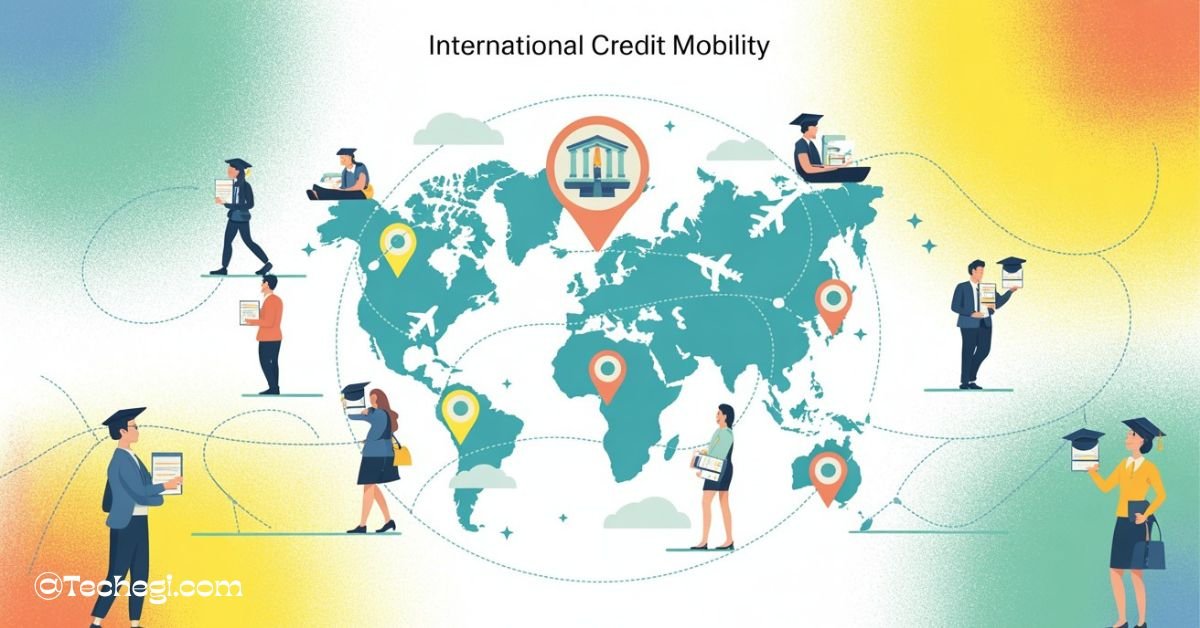
Introduction to International Credit Mobility
In today’s interconnected world, education knows no borders. One of the most impactful initiatives driving global learning is international credit mobility. This term refers to temporary study, teaching, or training opportunities available to students and staff across higher education institutions in various countries. Unlike full-degree programs abroad, international credit mobility allows participants to study or teach for a limited period while earning academic credits recognised by their home institution.
This type of mobility encourages not only academic growth but also cultural exchange, professional development, and a broader global perspective. Originating prominently within the European Union through the Erasmus+ program, international credit mobility has become a worldwide movement, involving institutions in Asia, Africa, Latin America, and beyond. Whether you’re a student seeking to enrich your studies or a staff member aiming to share expertise, ICM opens doors to transformative international experiences. This article explores every aspect of international credit mobility to help you navigate opportunities, requirements, funding, and more.
Erasmus+ and ICM (KA107): What It Means
Erasmus+, the European Union’s flagship education program, plays a crucial role in promoting international academic exchanges. Under Erasmus+, Key Action 1 (KA107) focuses explicitly on International Credit Mobility between EU Programme Countries and Partner Countries worldwide. Unlike intra-European Erasmus exchanges, KA107 supports student and staff mobility between EU institutions and their non-EU partners.
KA107 aims to enhance the quality of higher education by enabling participants to acquire new skills, expand their networks, and foster international cooperation. Mobility projects are developed through inter-institutional agreements, ensuring structured and quality-assured experiences.
Each mobility under KA107 includes:
- Academic credit recognition
- Financial support for travel and living expenses
- A formal learning or teaching agreement between institutions
By engaging in KA107 mobility, participants not only benefit from academic growth but also contribute to institutional internationalisation strategies. As a result, international credit mobility becomes a cornerstone for global engagement in education.
Who Can Participate—Students & Staff
International credit mobility is accessible to a wide range of individuals within higher education institutions. The Erasmus+ guidelines and agreements between partner universities typically define eligibility.

Students
To be eligible for international credit mobility:
- You must be enrolled in a Bachelor’s, Master’s, or PhD program.
- You should have completed at least one year of your studies.
- You must demonstrate adequate language proficiency, typically in English or the language of the host institution.
- You must be selected through a transparent and merit-based process organized by your university.
Staff
Academic and administrative staff can also participate in mobility programs. They may engage in:
- Teaching assignments abroad
- Training programs or job-shadowing opportunities
Staff mobility generally requires:
- Employment at a participating institution
- A defined teaching or training plan agreed upon by both institutions
This inclusive structure ensures that both learners and educators benefit from international exposure, enhancing the quality and global relevance of higher education.
Types of Mobility: Studies, Traineeships, Teaching, Training
International credit mobility encompasses a range of activities, each tailored to address distinct academic and professional objectives.
Student Mobility
- Study Mobility (SMS): Students can spend 3 to 12 months at a partner university. The credits earned during this period are transferred back to the home institution.
- Traineeships (SMP): Students can undertake internships or practical training abroad. This type of mobility also typically lasts between 2 to 12 months.
Staff Mobility
- Teaching Assignments (STA): Faculty members can spend 5 days to 2 months teaching at a partner institution. This fosters knowledge exchange and academic cooperation.
- Training Mobility (STT): Non-teaching staff and academic personnel can participate in workshops, job shadowing, or skill-building sessions abroad.
These diverse mobility formats make the program flexible and inclusive, catering to various academic levels and institutional needs.
Target Regions & Partner Countries
Erasmus+ ICM operates on a global scale, with countries grouped into 12 regions based on geographic and strategic priorities. Each project defines its target region(s) based on institutional partnerships.
| Region | Example Countries | Direction of Mobility |
| Western Balkans | Albania, Serbia | Inbound & Outbound |
| Eastern Europe & Caucasus | Ukraine, Georgia | Inbound & Outbound |
| South-Mediterranean | Morocco, Egypt | Inbound & Outbound |
| Asia | India, China, Japan | Inbound & Outbound |
| Latin America | Brazil, Argentina | Inbound & Outbound |
| Sub-Saharan Africa | Nigeria, Kenya | Inbound & Outbound |
| Middle East | Jordan, Lebanon | Inbound & Outbound |
| Central Asia | Kazakhstan, Uzbekistan | Inbound & Outbound |
| USA & Canada | USA, Canada | Mostly Outbound |
Partner countries must have signed inter-institutional agreements with Erasmus+ Programme Countries. The scope of mobility (students or staff, inbound or outbound) depends on these agreements and funding availability.
Eligibility & Application Process
Applying for international credit mobility involves several key steps. Here is a general guide to help students and staff navigate the process:
For Students
- Check eligibility: Must be enrolled in an eligible higher education program.
- Look for calls: Your university’s international office will announce mobility calls.
- Apply: Apply with academic records, a motivation letter, and a language certificate.
- Selection: Universities conduct a merit-based selection process.
- Nomination: Selected candidates are nominated to the partner university.
- Learning Agreement: Prepare and sign a document outlining planned courses.
For Staff
- Identify opportunity: Teaching or training mobility must be pre-arranged.
- Submit a proposal: Include your mobility plan and expected outcomes.
- Approval: Both your home and host institutions must approve your mobility.
Both students and staff should consult their international office for institution-specific requirements and timelines.
Funding Overview: Grants & Top‑Ups
Financial support is a key feature of international credit mobility. The Erasmus+ program provides funding to cover travel costs and daily expenses.
| Type of Expense | Coverage | Notes |
| Travel Costs | €180–€1500 | Based on distance between institutions |
| Subsistence Grant (Students) | €700–€850/month | Varies by host country |
| Staff Allowance | €160–€180/day | Depending on the destination |
| Top-up for Students with Fewer Opportunities | Additional €250/month | For students with financial or social disadvantages |
These grants aim to make mobility accessible to all, especially students from underrepresented groups. The home institution provides funding and may be contingent upon the completion of learning or training agreements.
Credit Recognition & Learning Agreements
One of the cornerstones of international credit mobility is the assurance that academic work completed abroad will be recognised by the home institution. This is facilitated through Learning Agreements and the European Credit Transfer and Accumulation System (ECTS).
Learning Agreement (For Students)
This document outlines:
- Courses to be taken abroad
- Number of credits (usually ECTS)
- Signatures from the student and both institutions
Teaching/Training Agreement (For Staff)
Defines:
- Mobility objectives
- Content of teaching/training activities
- Expected outcomes
After mobility, the host institution provides a Transcript of Records or Certificate of Attendance, ensuring the earned credits or skills are formally recognised.
Strategic Goals: Inclusion, Sustainability & Quality

Erasmus+ international credit mobility aligns with broader EU priorities that enhance the relevance and impact of higher education. These include:
- Inclusion: Special efforts to involve students with fewer opportunities, such as those from low-income, rural, or underrepresented backgrounds.
- Sustainability: Encouraging green mobility options (e.g., using trains over flights) and promoting awareness of global environmental issues.
- Digital Transformation: Supporting blended mobility options and digital learning tools.
- Quality Assurance: Standardising learning agreements, using transparent selection criteria, and ensuring academic credit transfer.
These goals reflect the EU’s commitment to building a fairer, greener, and more connected world through education and sustainable development.
Preparing for Mobility: Before, During, After
A successful international credit mobility experience requires preparation at every stage.
Before
- Research partner institutions and programs
- Apply and complete selection procedures
- Arrange visas, insurance, and accommodation
- Finalise learning or training agreements
During
- Attend orientation sessions
- Stay in touch with your home university
- Engage fully in academic, cultural, and social life
After
- Submit a transcript or certificate to the home institution
- Share your experience with peers
- Provide feedback to international offices
Thorough preparation helps ensure the mobility experience is enriching and academically rewarding.
Challenges & Solutions in ICM
Despite its benefits, international credit mobility can present challenges. Recognising these early and preparing for them enhances the success of the experience.
Common Challenges
- Credit transfer issues: Some courses may not perfectly align.
- Language barriers: Communication may be difficult in non-English-speaking countries.
- Visa delays: Bureaucracy can hold up travel plans.
- Cultural adjustment: Adapting to new academic norms and lifestyles takes time.
Solutions
- Choose partner institutions with compatible curricula
- Attend pre-departure language and culture workshops
- Apply early for visas
- Seek mentorship or peer support networks abroad
Universities are increasingly addressing these issues by offering preparatory sessions, support services, and follow-up evaluations.
Institution & Student Case Studies
Real-world examples offer insight into the tangible impact of international credit mobility.
University of Ljubljana, Slovenia
Partnered with institutions in Latin America and Sub-Saharan Africa, offering balanced outbound and inbound mobility.
LMU Munich, Germany
Focuses on the mobility of medical and science students to Asia, with strong pre-mobility training and credit recognition.
Student Story: Ayesha from Pakistan
Spent a semester in Italy under KA107. Faced language challenges but gained new research skills and lifelong friends. Her credits were fully recognised.
These cases highlight the adaptability and benefits of international credit mobility across diverse fields and regions.
Conclusion & Future Directions
International credit mobility stands as a powerful tool for global education. Through well-structured programs like Erasmus+ KA107, students and staff can gain international exposure, academic enrichment, and personal growth. While challenges persist, ongoing innovations in digital tools, green travel, and inclusive policies are enhancing accessibility and quality.
As global cooperation in education continues to grow, international credit mobility will play a central role in shaping the future of higher education. Whether you are a student, staff member, or policymaker, now is the time to explore the world through learning.
FAQs About International Credit Mobility
1. How is international credit mobility different from full-degree study abroad?
ICM is for temporary academic exchange where credits are transferred to your home university, unlike full-degree programs, where you complete an entire program abroad.
2. Do I need to pay tuition fees at the host university?
No, under Erasmus+ ICM, students typically do not pay tuition fees at the host institution.
3. Can I apply for multiple mobility programs?
Yes, but there are limits. For example, Erasmus+ caps total mobility at 12 months per study cycle (Bachelor, Master, PhD).
4. Is it mandatory to know the local language of the host country?
Not always. Many courses are offered in English. However, basic knowledge of the host language is encouraged.
5. What documents are essential for a successful application?
Commonly required documents include a completed application form, a transcript of records, a motivation letter, a language certificate, and a learning or mobility agreement.
Also read:
- Are Mobile Homes Cheaper Than Apartments? Truth Revealed!
- Mobile Dep Guide 2025: Deploy & Repair Devices Fast!
- Cozy Mobile Homes with Porches: Styles, Tips & Benefits!