

Lipoprotein fractionation ion mobility is an advanced lab technique that precisely separates and measures blood lipoprotein particles by size and type. It provides detailed insight into cardiovascular risk beyond standard cholesterol tests. This method helps doctors personalize treatment by detecting harmful small LDL and protective HDL particles.
Stay tuned with us—we will talk about lipoprotein fractionation ion mobility, its role in advanced cardiovascular risk assessment, and how it can help personalize your heart health management.
Introduction to Lipoprotein Fractionation Ion Mobility
Lipoprotein fractionation ion mobility is a lab method used to break down and study the tiny fat-carrying particles in your blood. These particles, called lipoproteins, move through your body and carry cholesterol. With ion mobility, doctors can separate these lipoproteins by size and type using an electric field in a gas stream.
This test gives a clear picture of your lipoprotein makeup, showing how many small, medium, or large particles you have. It’s much more detailed than a basic cholesterol test.
Doctors use lipoprotein fractionation ion mobility test in advanced lipid testing to help find hidden risks of heart problems. This test helps spot early signs of cardiovascular disease (CVD), even when standard blood tests look normal.
The Technology Behind Lipoprotein Fractionation Ion Mobility
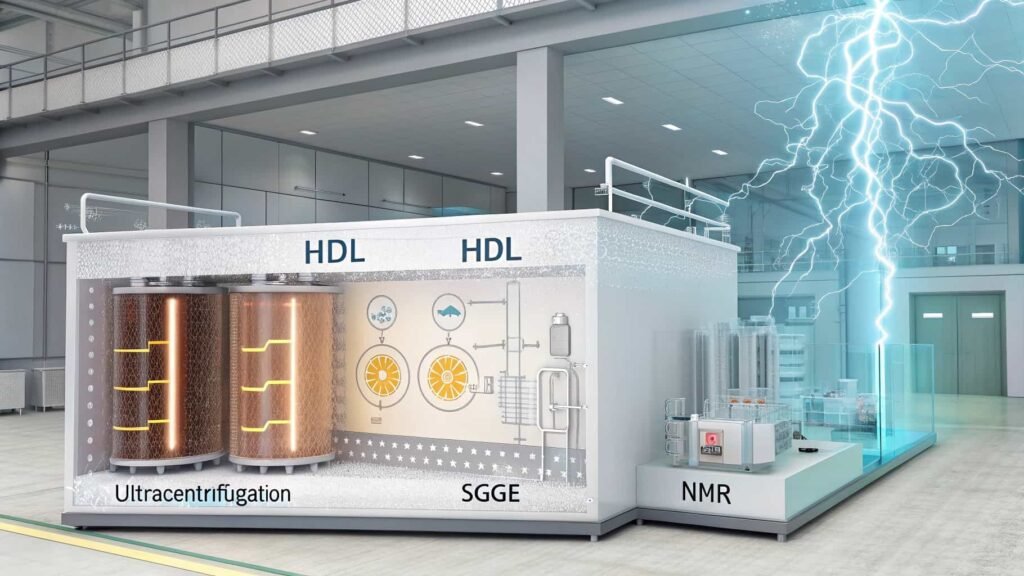
Lipoprotein fractionation using ion mobility employs an advanced analytical technique known as gas-phase laminar flow electrophoresis. In this process, lipoprotein particles are charged and then passed through a chamber filled with inert gas. As the particles move through the chamber under an electric field, they separate based on their size and charge. A particle detector measures the time and rate at which each type moves, giving a precise profile of lipoprotein subfractions.
This technique offers greater accuracy than traditional methods such as:
- Ultracentrifugation – separates by density, but is time-consuming and labor-intensive.
- Sodium Gradient Gel Electrophoresis (SGGE) – separates lipoproteins by size using gel matrices but lacks high resolution.
- Nuclear Magnetic Resonance (NMR) – offers indirect measurements and estimates particle sizes but may overestimate certain fractions.
Compared to these, ion mobility analysis offers direct, high-resolution measurement of lipoprotein particles, making it particularly effective for identifying cardiovascular risk through detailed subclass profiling.
What Lipoprotein Fractions Are Measured?
Using lipoprotein fractionation ion mobility, labs can break down cholesterol carriers into highly detailed subgroups. These include:
- VLDL (Very-Low-Density Lipoprotein)
- IDL (Intermediate-Density Lipoprotein)
- LDL (Low-Density Lipoprotein) – subdivided into:
- Small LDL particles
- Medium LDL particles
- Total LDL particle count (also known as ion mobility LDL particle number)
- Small LDL particles
- HDL (High-Density Lipoprotein) – divided into:
- Large HDL particles
- Small HDL particles
- Large HDL particles
A key output of the test is the LDL peak particle size, which can indicate a person’s lipoprotein pattern:
- Pattern A: Larger, buoyant LDL particles (generally lower risk)
- Pattern B: Smaller, dense LDL particles (linked to higher cardiovascular risk)
Understanding these patterns helps clinicians tailor more personalized treatment strategies. For instance, individuals with Pattern B often respond better to lifestyle changes and specific therapies that reduce small LDL concentration.
Clinical Significance of Lipoprotein Fractionation Ion Mobility
The clinical significance of lipoprotein fractionation ion mobility lies in its ability to uncover hidden cardiovascular risks that traditional cholesterol tests may miss. Research consistently shows that the number and size of lipoprotein particles—not just cholesterol content—play a crucial role in predicting cardiovascular disease (CVD).
- Small and Medium LDL Particles: These particles are more likely to penetrate arterial walls, oxidize, and form plaques, contributing to atherosclerosis. Studies show a strong correlation between elevated small/medium LDL levels and increased CVD risk.
- Large HDL Particles: Higher levels of large HDL particles are associated with protective cardiovascular effects, including enhanced reverse cholesterol transport.
- Coronary Artery Calcification (CAC): Multiple studies link specific lipoprotein subfractions—exceptionally high small LDL concentrations—to increased CAC scores, a key marker for subclinical atherosclerosis.
- Principal Component Analysis (PCA): PCA from population studies has demonstrated that specific lipoprotein profiles—identified only through ion mobility—cluster vigorously with high-risk phenotypes, including insulin resistance, metabolic syndrome, and elevated triglycerides.
Thus, lipoprotein fractionation ion mobility enables more precise cardiovascular risk stratification, especially in patients with “normal” traditional lipid profiles but underlying lipoprotein abnormalities.
Advantages Over Other Lipoprotein Tests
When compared to conventional testing technologies, lipoprotein fractionation ion mobility offers several key advantages:
- Direct Measurement vs. Indirect Estimation: Unlike NMR (nuclear magnetic resonance), which calculates particle numbers indirectly using magnetic field resonance patterns, ion mobility directly measures particles based on their physical size and electrical charge. This results in greater accuracy and less dependency on mathematical assumptions.
- Superior Subclass Resolution: Ion mobility technology provides high-resolution subclass separation, enabling precise differentiation between small, medium, and large LDL and HDL particles. This clarity is often lacking in other methods like ultracentrifugation or SGGE.
- High Reproducibility and Sensitivity: Studies show that ion mobility lipoprotein testing delivers consistent results across samples, making it reliable for both diagnostic purposes and longitudinal monitoring of treatment effects.
These advantages make it particularly useful for clinicians managing patients with borderline lipid values, statin resistance, or complex metabolic conditions.
Limitations and Criticisms of Lipoprotein Fractionation Ion Mobility
While lipoprotein fractionation ion mobility provides high-resolution particle data and improved cardiovascular risk profiling, it is not without limitations and ongoing debate in the clinical community.
- Analytical Limitations: The technology relies on precision equipment and specific calibration protocols. Variations in laboratory setup or technician skill may affect results. Additionally, sample stability is a concern—blood samples must be shipped under strict temperature-controlled conditions to prevent particle degradation. Labs such as Lipoprotein Fractionation, Ion Mobility Labcorp, Cleveland HeartLab, and Quest Diagnostics often provide specialized kits to ensure reliability.
- Shipping and Processing Requirements: Because ion mobility analysis is sensitive, the samples must be processed within specific timeframes. Delays or improper handling can lead to inaccurate readings, which may affect clinical decision-making.
- LDL Particle Size vs. ApoB Count Debate: Some lipidologists argue that while LDL size offers valuable insights, Apolipoprotein B (ApoB)—which measures the actual number of atherogenic particles—may be a better predictor of cardiovascular events. Critics suggest that small LDL may not always equate to high risk if ApoB levels are low. Therefore, some clinicians recommend using ion mobility in conjunction with ApoB testing, rather than as a standalone assessment.
Despite these concerns, lipoprotein fractionation by ion mobility remains a valuable tool, particularly when used thoughtfully and interpreted alongside other biomarkers.
Clinical Applications and Use Cases of Lipoprotein Fractionation Ion Mobility
The clinical utility of lipoprotein fractionation ion mobility is growing, especially in personalized and preventive cardiology. This test is particularly beneficial for patients whose traditional lipid panels don’t reflect the whole picture.
- Intermediate to High-Risk Patients: This includes individuals with a family history of early heart disease, metabolic syndrome, type 2 diabetes, or persistently borderline cholesterol values. In these cases, subfraction testing can reveal elevated small LDL or low significant HDL factors that may otherwise go unnoticed.
- Therapy Monitoring: The test is valuable for monitoring lipid-lowering treatments like statins, fibrates, niacin, or PCSK9 inhibitors. Some therapies may change the size and number of lipoprotein particles before altering total LDL-C or HDL-C levels. Fractionation results help assess treatment response at a deeper level.
- Lifestyle Intervention Feedback: Patients making significant dietary or exercise changes can use ion mobility results to track improvements in lipoprotein profile. For example, a reduction in small LDL and an increase in large HDL after weight loss or carbohydrate restriction can offer motivational feedback and clinical confirmation of progress.
By tailoring treatments based on ion mobility data, clinicians can provide precision therapy that addresses not just cholesterol levels, but the accurate atherogenic risk profile of their patients.
Lipoprotein Fractionation Ion Mobility Interpretation
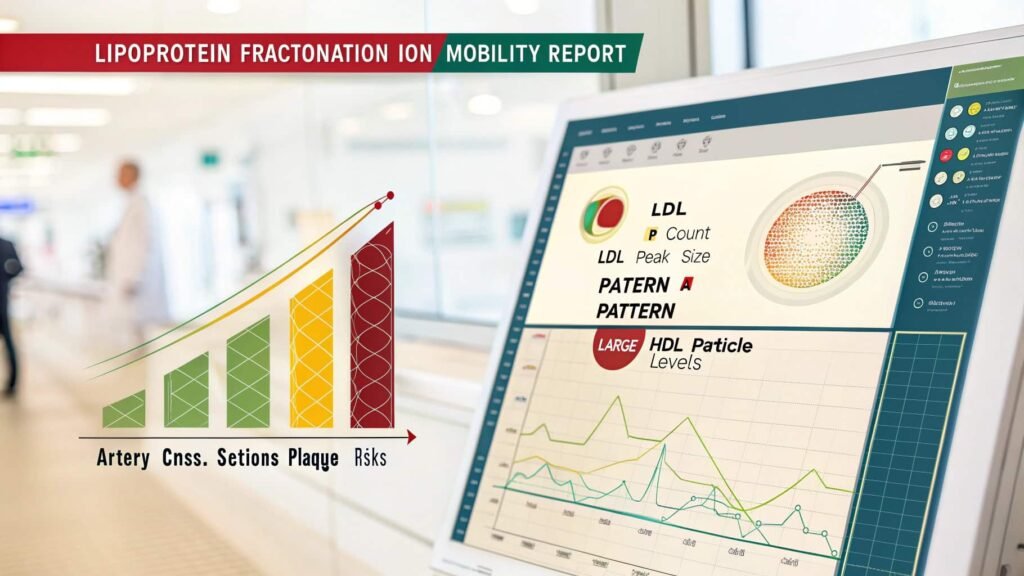
Interpreting lipoprotein fractionation ion mobility reports requires understanding several key metrics that reveal a patient’s detailed lipid profile beyond standard cholesterol numbers:
- Small and Medium LDL Particles: Elevated levels indicate a higher risk of atherosclerosis, as these particles more readily infiltrate artery walls.
- LDL-P (LDL Particle Number): This value counts all LDL particles regardless of size, offering a direct measure of atherogenic burden.
- LDL Peak Size: Determines whether the patient exhibits Pattern A (large, buoyant LDL) or Pattern B (small, dense LDL). Pattern B is linked to increased cardiovascular risk.
- Large HDL Number: Higher counts of large HDL particles are generally protective, as they promote cholesterol removal from arteries.
Clinicians combine these measurements with traditional lipid panels and clinical context to stratify risk accurately. For example, a patient with normal LDL-C but high small LDL-P and Pattern B may require aggressive lifestyle or pharmacologic intervention.
Future Directions and Research Opportunities in Lipoprotein Fractionation Ion Mobility
The field of lipoprotein fractionation ion mobility continues to evolve with promising avenues for research and clinical application:
- Validation in Broader Populations: While current evidence supports its use in cardiovascular and metabolic disease, ongoing studies aim to confirm the utility of ion mobility across diverse groups, including those with metabolic syndrome, diabetes, and inflammatory conditions.
- Integration with Multi-Omics and Personalized Medicine: Future research may combine ion mobility lipoprotein data with genomics, proteomics, and metabolomics. This integration could enable highly tailored therapies based on a patient’s unique molecular and lipoprotein profile, advancing precision cardiovascular medicine.
- Development of Point-of-Care Technologies: Efforts are underway to create faster, more accessible ion mobility devices for routine clinical use, potentially improving early detection and treatment monitoring.
These future developments will enhance the impact of lipoprotein fractionation ion mobility in reducing the cardiovascular disease burden worldwide.
Suggested Recommendations & Best Practices for Lipoprotein Fractionation Ion Mobility
For optimal clinical utility, here are key recommendations regarding lipoprotein fractionation ion mobility testing:
- When and Whom to Test: This advanced testing is most beneficial for intermediate to high-risk patients, such as those with a family history of premature cardiovascular disease, metabolic syndrome, diabetes, or persistent borderline lipid values. It’s beneficial when traditional lipid panels and ApoB results do not fully explain clinical risk.
- Integrating Results into Clinical Decision-Making: Clinicians should interpret ion mobility data alongside traditional lipid tests, ApoB, and patient history. Elevated small LDL particle numbers or Pattern B LDL can guide the intensification of lifestyle modifications or initiation/adjustment of lipid-lowering therapies like statins, fibrates, or niacin.
- Ordering From Validated Laboratories: Because ion mobility testing requires strict sample handling and sophisticated equipment, always order tests from labs with established validated protocols and sample stability assurances, such as Quest Diagnostics, Lipoprotein Fractionation, Ion Mobility Labcorp, or Cleveland HeartLab, to ensure accurate and reliable results.
FAQ’s
1. What is lipoprotein fractionation ion mobility and why is it important?
Lipoprotein fractionation ion mobility is a precise lab technique that separates lipoprotein particles by size and charge, providing detailed cardiovascular risk insights beyond traditional cholesterol tests.
2. How does lipoprotein fractionation ion mobility differ from other lipid tests?
Unlike traditional tests, this method directly measures lipoprotein particle size and number with high resolution, offering more accurate subclass analysis compared to NMR or ultracentrifugation.
3. Who should consider getting a lipoprotein fractionation ion mobility test?
Patients with borderline cholesterol levels, metabolic syndrome, diabetes, or a family history of heart disease can benefit from this test for better risk assessment and personalized treatment planning.
4. Can lifestyle changes affect lipoprotein fractionation ion mobility results?
Yes, lifestyle interventions like diet, exercise, and weight loss can improve lipoprotein particle profiles, reducing harmful small LDL and increasing protective large HDL particles.
5. Are lipoprotein fractionation ion mobility tests widely available?
While still specialized, these tests are available through major labs like Labcorp and Quest Diagnostics, often ordered by cardiologists or lipid specialists for advanced cardiovascular risk evaluation.
Conclusion
Lipoprotein fractionation ion mobility offers a robust, detailed analysis of lipoprotein particles that enhances cardiovascular risk assessment beyond traditional lipid panels. By directly measuring and differentiating lipoprotein subclasses, it identifies hidden risks, especially related to small, dense LDL particles and HDL quality.
While limitations like sample handling and ongoing debates about particle size versus ApoB exist, this technology remains a valuable complement in clinical lipidology. Its precision allows for better risk stratification and personalized treatment strategies, particularly for patients with complex or borderline lipid profiles.
Clinicians are encouraged to incorporate lipoprotein fractionation ion mobility into their diagnostic toolkit, alongside ApoB and traditional lipid measures, to improve cardiovascular outcomes through targeted interventions.
Also read:
- CleanPay Mobile App: Easy, Secure Bill Payments on the Go!
- Medent Mobile: Secure On-the-Go EMR Access for Providers!
- myMITC Mobile App: Easy Workforce Management Tool!