
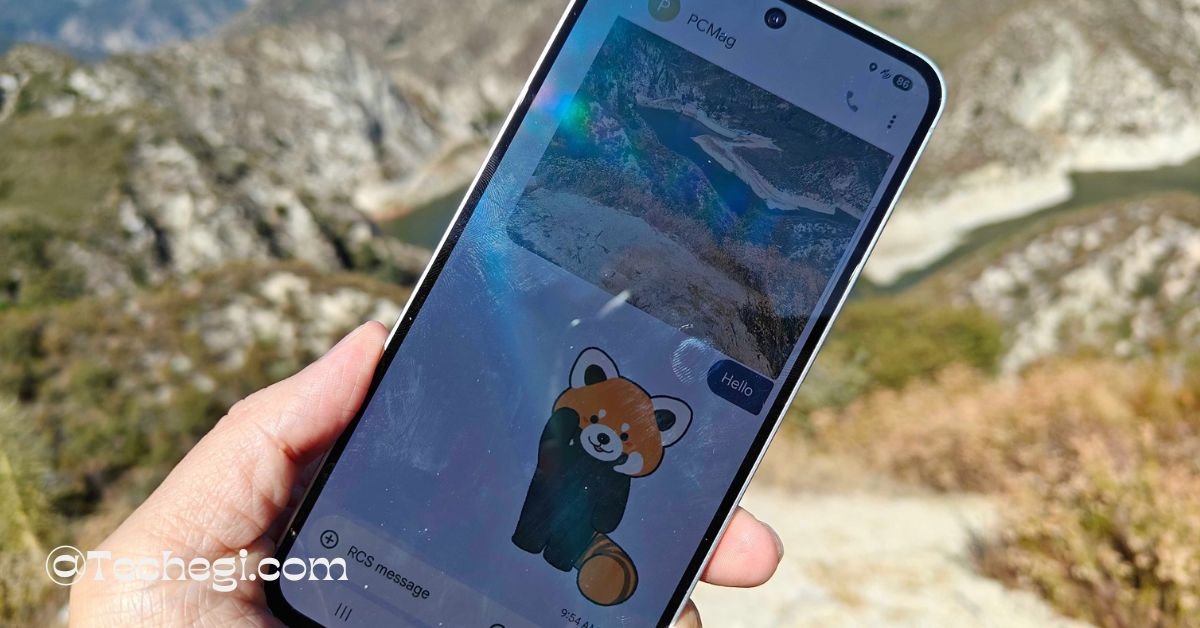
The mobile connectivity landscape is undergoing a revolutionary shift, and T-Mobile is at the forefront of this transformation. With the expansion of its satellite-powered network, T-Mobile has officially taken a major leap forward by enabling MMS support through its satellite service, commonly referred to as the T-Mobile MMS satellite feature. This innovation allows users to send multimedia messages—photos, audio, and even short videos—directly through satellites, eliminating reliance on traditional cell towers.
This article provides an in-depth look at how the T-Mobile MMS satellite feature works, which devices support it, its real-world performance, benefits, limitations, pricing, and what the future holds for satellite-based mobile communication.
What Is T-Mobile’s Satellite Messaging Service?
T-Mobile’s satellite messaging solution, known as T-Satellite, is a groundbreaking service developed in partnership with SpaceX’s Starlink satellite network. Unlike conventional mobile networks that rely on ground-based towers, T-Satellite connects smartphones directly to low Earth orbit (LEO) satellites.
Key Purpose of T-Satellite
- Provide connectivity in remote, rural, and disaster-prone areas
- Eliminate dead zones where cellular towers do not exist
- Enable basic communication without special satellite phones
Initially, this service supported only SMS (Short Messaging Service). However, with the latest upgrade, T-Mobile has expanded functionality to include MMS, making the service far more practical and powerful.
Introduction to the T-Mobile MMS Satellite Feature
The T-Mobile MMS satellite feature allows users to:
- Send and receive photos
- Share audio clips
- Transfer short video files
- Communicate from virtually anywhere on Earth
This is achieved without external hardware, antennas, or satellite phones. All you need is a compatible smartphone and an active T-Mobile plan that supports T-Satellite.
This advancement marks a significant milestone in consumer satellite communication, bridging the gap between traditional cellular services and satellite-based networks.
Devices That Support T-Mobile MMS Satellite Feature
Currently, the T-Mobile MMS satellite feature is available on select Samsung and Motorola smartphones, with Samsung leading the way.
Supported Samsung Devices
More than 41 Samsung Galaxy models support the service, including:
- Galaxy A-series (A14 and above)
- Galaxy S-series (S21 to S24 FE)
- Galaxy Z Flip series
- Galaxy Z Fold series (up to Z Fold 7)
Samsung’s early adoption gives Galaxy users a significant advantage, as other brands are still waiting for support.
Unsupported Devices (For Now)
- Apple iPhones ❌
- Google Pixel devices ❌
Although Apple and Google already have limited satellite SOS features, they currently do not support MMS via T-Mobile’s satellite network. However, industry experts expect broader compatibility in the near future.
How the T-Mobile MMS Satellite Feature Works
The process is designed to be seamless and user-friendly.
Step-by-Step Functionality
- User moves into an area with no cellular coverage
- Smartphone automatically detects the absence of terrestrial signal
- Device connects to Starlink satellites
- Messaging switches to satellite mode
- MMS messages are transmitted via space-based network
No manual configuration is required. The transition happens automatically in the background.
Real-World Performance of Satellite MMS
While the technology is impressive, early user feedback highlights some performance limitations.
Speed & Latency
- Photos may take 2–5 minutes to send or receive
- Videos can take significantly longer
- Audio files fall somewhere in between
This is expected, as satellite bandwidth is currently optimized for reliability rather than speed.
Reliability Over Speed
Despite slower performance, the ability to send MMS from places like:
- Mountains
- Deserts
- Open seas
- Disaster zones
…without any infrastructure is a major achievement.
Why the T-Mobile MMS Satellite Feature Is Important
This feature isn’t just about convenience—it’s about connectivity without boundaries.
Key Benefits
- Works in emergency situations
- Ideal for hikers, travelers, explorers
- Useful during natural disasters
- No need for satellite phones
- Integrated directly into standard smartphones
It redefines what mobile communication means in the modern world.
Pricing and Availability
T-Mobile offers the satellite MMS feature through:
Subscription Options
- Included with Experience Beyond plans
- Or available as an add-on for $10 per month
This pricing makes satellite messaging accessible to everyday users rather than limiting it to specialized professionals.
Comparison: SMS vs MMS via Satellite
| Feature | SMS Satellite | MMS Satellite |
| Text Messages | ✅ | ✅ |
| Photos | ❌ | ✅ |
| Audio | ❌ | ✅ |
| Videos | ❌ | ✅ |
| Speed | Faster | Slower |
| Use Case | Basic communication | Rich media sharing |
The addition of MMS significantly enhances usability.
Limitations of the T-Mobile MMS Satellite Feature
Despite its innovation, the service has some constraints.
Current Drawbacks
- Slow transmission speeds
- Limited device compatibility
- Large files take a long time
- Works best in open-sky environments
- Not ideal for real-time chatting
However, these limitations are expected to reduce as satellite infrastructure improves.
Future of Satellite-Based MMS
The launch of the T-Mobile MMS satellite feature is just the beginning.
What to Expect Next
- Faster satellite speeds
- Support for more devices
- Improved compression technology
- Potential voice and video calling
- Broader global rollout
As Starlink continues to deploy more satellites, performance is expected to improve dramatically.
Impact on the Mobile Industry
This move puts pressure on competitors like:
- Verizon
- AT&T
- Apple
Satellite messaging is likely to become a standard feature in future smartphones.
Use Cases Where Satellite MMS Is a Game-Changer
- Emergency response teams
- Remote construction workers
- Adventure travelers
- Journalists in conflict zones
- Disaster relief operations
For these users, even slow MMS is far better than no connectivity at all.
Security and Privacy Considerations
T-Mobile states that satellite messages follow the same security standards as traditional messaging, including:
- Encrypted transmission
- Carrier-level protection
- Secure routing through Starlink infrastructure
This ensures user data remains protected even when routed through space.
How to Enable T-Mobile MMS Satellite Feature on Samsung Phones
- Ensure your device is supported
- Update phone software to the latest version
- Subscribe to an eligible T-Mobile plan
- No additional setup required
- Satellite mode activates automatically when needed
Conclusion
The T-Mobile MMS satellite feature represents a monumental shift in mobile communication. By enabling multimedia messaging via satellites, T-Mobile has moved beyond traditional network limitations and opened the door to truly global connectivity.
While the service is still in its early stages and has room for improvement, its real-world impact is undeniable. As technology advances, satellite-based MMS could become as fast and common as regular mobile messaging—changing how the world stays connected forever.