
Introduction: What Is Dual SIM and Why It Matters
In today’s connected world, smartphones are no longer just communication tools; they are essential devices for work, travel, and daily life. As mobile usage continues to grow, many users want flexibility without carrying multiple phones. This is where understanding what is dual sim becomes important. Dual SIM technology allows a single smartphone to use two different SIM cards at the same time, enabling users to manage multiple phone numbers, networks, or data plans effortlessly.
Dual SIM phones have gained popularity worldwide because they solve real-life problems. People often need separate numbers for work and personal life, better network coverage, or affordable international connectivity. Instead of switching devices or SIM cards constantly, dual SIM phones make everything easier in one place.
This guide explains what is dual sim from beginner to advanced level. You will learn how dual SIM works, the different types of dual SIM technology, benefits and limitations, setup instructions, common problems, and whether dual SIM is worth using in 2025 and beyond. By the end, you will clearly understand whether a dual SIM phone is the right choice for your needs.
What Is Dual SIM? (Simple Definition)
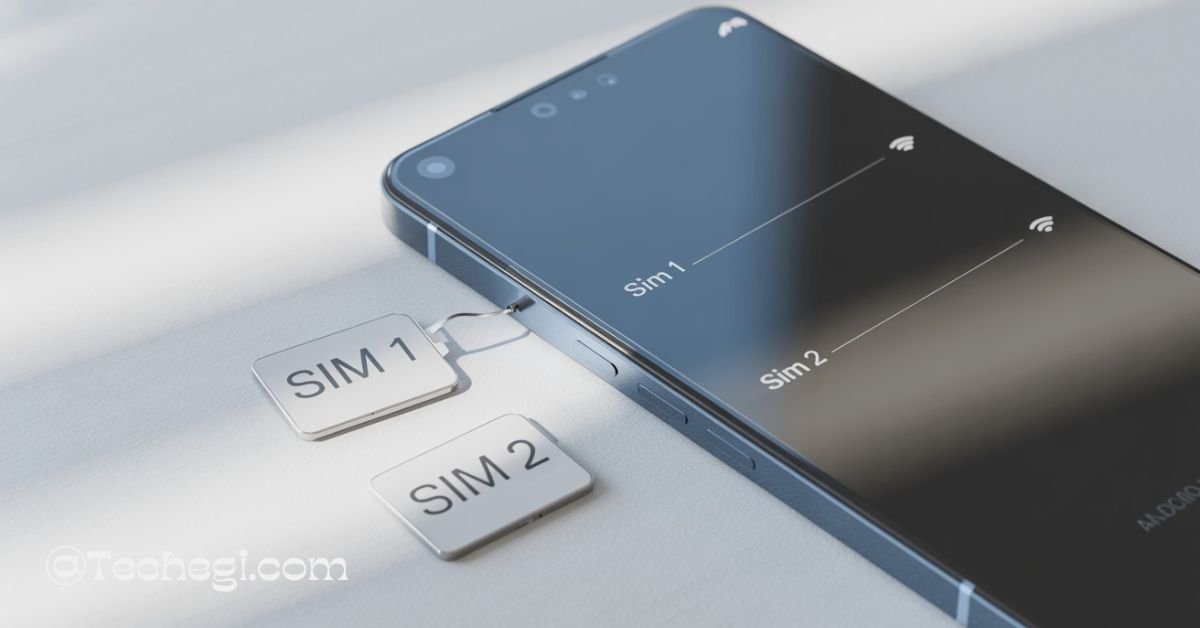
To understand what is dual sim, it helps to start with a simple definition. Dual SIM is a smartphone feature that allows a single device to use two SIM cards simultaneously. Each SIM card connects to a mobile network, giving the phone two separate phone numbers, network connections, or mobile plans.
In practical terms, dual SIM means one phone can receive calls and messages from two different numbers. For example, you can use one SIM for work and another for personal use without switching phones. Both SIMs remain active depending on the phone’s dual SIM technology.
In smartphones, dual SIM capability can be achieved through two physical SIM card slots or a combination of a physical SIM and an embedded SIM (eSIM). Regardless of the method, the purpose remains the same: convenience and flexibility.
The key difference between a single SIM and a dual SIM phone is simple. A single SIM phone can connect to only one mobile network at a time, while a dual SIM phone manages two connections. This feature is especially helpful for users who need better coverage, lower costs, or separation between different aspects of their life.
How Does Dual SIM Work?
Understanding what is dual sim also requires knowing how the technology works internally. A dual SIM phone uses software and hardware systems to manage two SIM cards within one device. Depending on the type of dual SIM technology, the phone may use one or two radio transceivers to connect with mobile networks.
When both SIM cards are inserted or activated, the phone assigns specific roles to each SIM. One SIM can be set as the primary SIM for mobile data, while the other may handle calls or messages. Users can customize these settings based on preference.
Network handling is one of the most important aspects of dual SIM operation. If one SIM is receiving a call, the second SIM may become temporarily unavailable depending on the phone’s technology. However, modern dual SIM phones handle switching smoothly, minimizing missed calls and disruptions.
Calls, SMS, and mobile data are managed independently. Users can choose which SIM to use for outgoing calls or messages. Incoming calls can arrive on either SIM, and notifications clearly indicate which number is being used. The primary and secondary SIM concept ensures clarity, allowing users to control their connectivity without confusion.
Types of Dual SIM Technology
Dual SIM phones are not all the same. Different technologies determine how efficiently the phone manages two networks. Understanding these types is essential when learning what is dual sim in detail.
Dual SIM Standby (DSS)
Dual SIM Standby is the most common and widely used dual SIM technology. In DSS phones, both SIM cards remain on standby when the phone is idle. However, the device uses only one radio transceiver, meaning only one SIM can actively handle calls at a time.
When one SIM receives or makes a call, the other SIM becomes temporarily inactive. Despite this limitation, DSS phones are affordable, battery-efficient, and suitable for most users. The main benefit is convenience, while the limitation is the inability to handle two active calls simultaneously.
Dual SIM Active (DSA)
Dual SIM Active phones use two radio transceivers, allowing both SIM cards to stay active at the same time. This means you can receive calls on one SIM while talking on the other. DSA technology offers the highest level of flexibility.
However, this advanced functionality comes with increased power consumption and higher costs. Dual SIM Active phones are less common because most users do not require simultaneous call handling.
Dual SIM Dual VoLTE (DSDV)
Dual SIM Dual VoLTE is a modern advancement that supports 4G and 5G calling on both SIM cards. With DSDV, both SIMs can use high-speed data and voice services simultaneously.
This technology improves call quality, reduces call drop issues, and enhances overall network performance. It is increasingly common in newer smartphones and represents the future of dual SIM connectivity.
Physical Dual SIM vs eSIM Dual SIM
Another important aspect of understanding what is dual sim is knowing how SIM cards are implemented physically or digitally.
Physical Dual SIM Phones
Physical dual SIM phones include two separate SIM card slots. Users can insert two SIM cards from different carriers. This setup is straightforward and widely supported across Android devices.
The advantage of physical dual SIM phones is compatibility with most carriers worldwide. However, physical SIM slots take up space and may limit phone design flexibility.
Dual SIM with eSIM
Dual SIM with eSIM combines one physical SIM slot with one embedded digital SIM. The eSIM is built into the phone and activated through software. This setup is common in modern smartphones, including iPhones and flagship Android devices.
The main advantage of eSIM dual SIM phones is convenience, especially for travelers. Users can switch carriers digitally without inserting a new SIM card. eSIM technology is secure, efficient, and increasingly supported globally.
Benefits of Dual SIM Phones
The popularity of dual SIM phones is driven by their practical benefits. Once you understand what is dual sim, these advantages become clear.
Dual SIM phones allow users to separate personal and professional communication without carrying two devices. This improves organization and work-life balance. Using two networks also improves coverage, especially in areas where one carrier may have weak signals.
Cost savings are another major benefit. Users can combine affordable data plans with reliable calling networks. International travelers can use local SIM cards while keeping their home number active. Dual SIM phones also provide backup network reliability, ensuring connectivity even during outages.
Disadvantages of Dual SIM Phones
Despite their advantages, dual SIM phones also have limitations. Increased battery usage is a common concern because managing two networks requires more power. Network switching delays may occur in some devices, especially older models.
Carrier compatibility can be limited in certain regions, and beginners may find dual SIM settings confusing initially. However, most modern phones offer intuitive interfaces that reduce these challenges over time.
Who Should Use a Dual SIM Phone?
Dual SIM phones are ideal for business professionals who manage multiple contacts daily. Travelers and digital nomads benefit from affordable international connectivity. Students and freelancers appreciate cost control and flexibility.
Users in areas with weak network coverage can switch between carriers easily. Online sellers and customer support agents also benefit from managing multiple communication channels on one device.
Dual SIM vs Single SIM: Key Differences
The difference between dual SIM and single SIM phones lies in flexibility. Dual SIM phones support multiple networks, while single SIM phones focus on simplicity. Performance differences are minimal in modern devices, though dual SIM phones may consume slightly more battery.
Cost considerations vary, as dual SIM phones may be priced slightly higher. Ultimately, the choice depends on individual needs, lifestyle, and communication habits.
Dual SIM vs Single SIM Comparison Table
| Feature | Dual SIM Phone | Single SIM Phone |
| Number of SIMs | Two | One |
| Network Flexibility | High | Limited |
| Travel Convenience | Excellent | Moderate |
| Battery Usage | Slightly Higher | Lower |
| Best For | Multi-number users | Simple users |
Can You Use Mobile Data on Both SIMs?
A common question when learning what is dual sim is about mobile data usage. Most dual SIM phones allow only one SIM to use mobile data at a time. Users can switch data access between SIMs through settings.
Data limitations depend on device and carrier support. In advanced dual SIM phones with DSDV, both SIMs can support 4G or 5G, but typically only one handles active data usage at any moment.
Does Dual SIM Affect Battery Life?
Dual SIM phones may consume more battery because they maintain connections to two networks. Factors such as signal strength, network type, and usage patterns influence power consumption.
To reduce battery drain, users can disable the secondary SIM when not needed or limit background data usage. Real-world performance varies, but modern phones manage power efficiently with optimized software.
How to Set Up Dual SIM on Android and iPhone
On iPhone, dual SIM works using a physical SIM and an eSIM. After activating the eSIM, open Settings > Cellular to label each SIM and manage calls, messages, and data easily.
Dual SIM Setup on Android
Setting up dual SIM on Android involves inserting both SIM cards and configuring preferences. Users can assign default SIMs for calls, messages, and data. Android interfaces make it easy to switch between SIMs.
Dual SIM Setup on iPhone
On iPhones, dual SIM typically uses one physical SIM and one eSIM. Users label SIMs for clarity and manage data and calls through iOS settings. The setup process is simple and user-friendly.
Common Dual SIM Problems and Solutions
Dual SIM users may face issues such as one SIM not being detected or network switching problems. Missed calls and data connectivity issues can usually be resolved through software updates or settings adjustments.
Keeping the device updated and restarting the phone often fixes minor issues. Checking SIM placement and ensuring both SIMs are enabled in settings is also important. In some cases, resetting network settings can resolve persistent connection problems.
How to Check If Your Phone Supports Dual SIM
Users can check phone settings, inspect the SIM tray, or visit the manufacturer’s website to confirm dual SIM support. Model numbers often indicate dual SIM capability.
Another reliable method is checking the phone’s box or user manual for SIM details. Online reviews and official product pages also clearly mention whether a device supports dual SIM or eSIM.
Is Dual SIM Safe and Secure?
Dual SIM phones are generally safe and secure when used with trusted carriers. Call and data privacy depend on carrier security protocols and network encryption standards.
eSIM technology adds an extra layer of protection through encrypted activation and remote management. As long as users keep their phones updated, dual SIM does not increase security risks.
Is Dual SIM Worth It in 2025?
In 2025, dual SIM phones remain highly relevant for everyday users and professionals. Improved carrier support, widespread 5G availability, and growing eSIM adoption make dual SIM more useful than ever.
With better software optimization, modern dual SIM phones offer smooth performance and efficient battery management. For users who need flexibility, dual SIM is a smart long-term choice.
Best Use Cases of Dual SIM Phones
Dual SIM phones support better work-life balance by separating personal and professional calls. They are also ideal for international travel, allowing users to avoid expensive roaming charges.
Emergency backup connectivity is another major advantage if one network goes down. Many users also rely on dual SIM for online registrations and verification accounts.
Myths and Misconceptions About Dual SIM
Many believe dual SIM slows down phones, but modern devices are designed to handle multiple networks efficiently. Battery drain concerns are partially true but usually minimal in newer models.
Another common myth is that dual SIM always means two active data connections, which is not the case. Most phones allow data usage on only one SIM at a time.
Future of Dual SIM Technology
The future of dual SIM technology points strongly toward wider eSIM adoption and fewer physical SIM slots. Carriers are investing in multi-profile SIM support for better flexibility.
As smartphones become more advanced, dual SIM functionality will feel more seamless and user-friendly. Global adoption is expected to increase as digital SIM solutions expand.
FAQs About What Is Dual SIM
1. What is dual sim in simple words?
Dual SIM means a phone can use two SIM cards at the same time.
2. Can both SIMs receive calls at the same time?
It depends on the phone’s dual SIM technology.
3. Does dual sim work with 5G?
Yes, many modern dual SIM phones support 5G.
4. Is dual sim available on iPhone?
Yes, iPhones support dual SIM using physical SIM and eSIM.
5. Which dual sim type is best?
Dual SIM Dual VoLTE offers the best performance.
Conclusion: Should You Choose a Dual SIM Phone?
Understanding what is dual sim helps users make smarter smartphone choices. Dual SIM phones offer flexibility, cost savings, and convenience for modern communication needs. While they may use slightly more battery and require initial setup, the benefits often outweigh the drawbacks.
If you manage multiple numbers, travel frequently, or want better network coverage, a dual SIM phone is a practical investment. As technology advances, dual SIM functionality continues to improve, making it a valuable feature for users worldwide.