
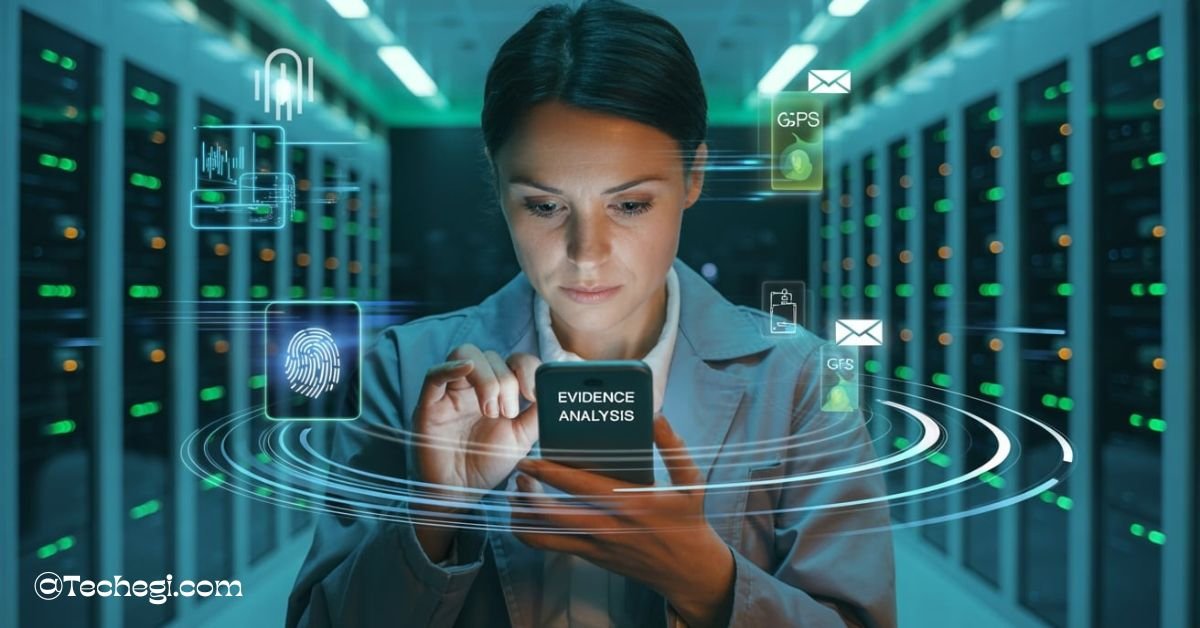
In today’s hyper-connected world, mobile devices are no longer just communication tools—they’re digital lifelines. Smartphones, tablets, and smartwatches now contain more personal data than any diary or filing cabinet ever could. From instant messages to bank logins, from GPS histories to social media activity, our devices are silent witnesses to our lives. So, when it comes to solving crimes, proving fraud, or uncovering malicious behavior, these portable tech gadgets can provide the most valuable digital evidence available.
This is exactly why mobile devices have become a central focus in digital forensic investigations. As cybercrime rates increase and criminal activities evolve in complexity, understanding the critical role of mobile data in uncovering truth has never been more important.
In this article, we’ll explore the rising importance of mobile devices in forensics, break down what makes them so valuable, and discuss how artificial intelligence is accelerating evidence discovery. We’ll also examine real-life cases, address legal and technical challenges, and share expert lifehacks for successful mobile forensics.
The Rising Importance of Mobile Devices in Digital Forensics
As mobile technology advances, its significance in criminal investigations has grown exponentially. What used to be overlooked is now among the first things investigators examine.
From Communication Tools to Digital Goldmines
Mobile devices have undergone a rapid transformation over the past two decades. What once served simply to make calls or send text messages is now a compact computing system capable of handling emails, banking, photo storage, and even medical monitoring. As a result, these devices are now digital goldmines for investigators.
Because people carry their mobile devices almost everywhere, the data collected becomes a reflection of their day-to-day activities. Whether it’s tracking app usage, online searches, or location check-ins, each interaction leaves behind a digital footprint. These footprints can then be analyzed to reconstruct events, verify statements, and support or disprove alibis.
How Smartphones, Tablets, and Wearables Store Crucial Evidence
The range of data stored in modern devices is vast. Mobile phones can house text messages, call logs, contact lists, emails, browser histories, and saved documents. Tablets may store downloaded files, cloud-based data, or even sensitive workplace material. Wearables, like smartwatches, can log biometric data such as heart rate, step counts, and timestamps—information that could verify a timeline or contradict an alibi.
Moreover, because many devices are synced across multiple platforms (e.g., cloud backups), the evidence found on one device may extend far beyond it. Forensic experts can retrieve a broader picture by analyzing all connected accounts and devices.
What Makes Mobile Devices Indispensable in Digital Investigations?
Mobile devices capture nearly every aspect of a person’s digital behavior. Their ability to store vast, detailed records makes them essential in uncovering truth in both criminal and civil cases.
Personal Data: Texts, Calls, Emails, and Media Files
Mobile devices are reservoirs of communication. Text messages, call logs, email exchanges, and multimedia files can provide vital clues about who a person has interacted with and when. These details help forensic teams establish timelines, spot inconsistencies in witness accounts, and detect fraudulent behavior.
For example, in fraud investigations, a deleted email may contain the smoking gun. In cases involving harassment or conspiracy, text messages could confirm intent. Media files such as photos and videos may contain metadata that gives exact timestamps and geolocation data—adding another layer of verification.
Geolocation Tracking: Pinpointing Suspects and Timelines
One of the most powerful forensic capabilities of mobile devices is geolocation tracking. GPS data can show where a person was at any given time. This is particularly valuable in criminal investigations where verifying an alibi or tracing the path of a suspect is key.
In some cases, investigators can even recreate a suspect’s movement throughout the day, pinpointing key locations visited. This has been instrumental in cases involving kidnappings, burglaries, and even murders, where time and location are critical.
App Data and Internet History as Legal Evidence
Today, mobile users interact with hundreds of apps—each storing unique data. Banking apps may contain transaction logs; ride-sharing apps can reveal movement history; dating apps could help profile suspects’ intentions or movements.
Likewise, browsing history can offer insights into what a person was researching or thinking about before an incident. For instance, suspicious searches such as “how to erase phone data remotely” or “untraceable poisons” have been used as circumstantial evidence in various investigations.
Cloud Sync and Cross-Device Connections in Forensics
Most modern mobile devices sync data across platforms, from iCloud and Google Drive to third-party backup services. Investigators can use cloud sync features to extract additional data not stored locally. This also means that even if a suspect deletes data from a device, copies might still exist in the cloud.
Moreover, the integration between devices—like smartphones controlling smart home systems or syncing with laptops—allows forensic experts to connect multiple sources of digital evidence, offering a more holistic view of a suspect’s behavior.
Real Cases That Show Why Mobile Devices Matter in Investigations
Mobile forensics isn’t theoretical—it’s proven effective in high-profile cases. From terrorism to serial killings, device data has helped close major investigations.
The Boston Marathon Bombing: Tracing Suspects Through Phones
In the 2013 Boston Marathon bombing, mobile devices played a key role in the investigation. Surveillance footage helped identify the Tsarnaev brothers, but it was their mobile phone usage that gave investigators detailed insight into their movements and communications before and after the incident. Call logs, text messages, and GPS tracking enabled law enforcement to reconstruct their timeline and apprehend them more quickly.
The BTK Killer: How Digital Clues Helped Crack the Case
Dennis Rader, known as the BTK killer, evaded capture for decades. Eventually, he sent a floppy disk to the police containing a Word document he thought was untraceable. However, metadata on the disk—linked to a church computer and Rader’s username—led investigators to him. Additional clues were uncovered from his mobile devices, confirming his identity and connecting him to past crimes. It was a pivotal moment in demonstrating how digital footprints can betray even the most cautious criminals.
San Bernardino Shooting: The Battle Between Privacy and Justice
The 2015 San Bernardino shooting case highlighted the complex balance between privacy and justice. After the attack, the FBI attempted to access the shooter’s encrypted iPhone, but Apple refused to unlock it, citing user privacy. The legal standoff brought national attention to how critical mobile data can be in investigations—and how encryption can sometimes obstruct justice. Ultimately, the FBI found a third-party vendor to unlock the phone, proving just how determined authorities are to access mobile evidence.
How Artificial Intelligence is Reshaping Mobile Forensics
Artificial intelligence is a game-changer in digital forensics. It enables faster, more accurate data analysis, helping investigators stay ahead of evolving threats.
AI-Powered Tools for Faster, Smarter Data Analysis
As mobile data grows more complex, AI is becoming a powerful ally in digital forensics. Investigators can now use machine learning algorithms to sift through massive volumes of data—emails, chats, images—within seconds. AI tools help detect patterns, classify information, and even identify anomalies that could point to criminal behavior.
Instead of manually scanning thousands of messages, forensic analysts can rely on AI to prioritize the most relevant data. Sentiment analysis, face recognition in photos, and keyword flagging are just a few examples of how AI increases both speed and accuracy in mobile investigations.
Why Partnering with an AI Development Company Matters
Many law enforcement agencies and forensic firms are now partnering with AI development companies to create customized tools tailored to digital investigations. These partnerships provide access to cutting-edge solutions like automated chain-of-custody systems, predictive behavior modeling, and intelligent search functions.
Such collaborations ensure that investigators not only stay up to date with technological advancements but also gain a competitive edge in solving complex cases faster and more accurately.
Expert Lifehacks for Mobile Device Forensic Investigations
Forensic professionals use proven techniques to protect and extract mobile data. These lifehacks improve the accuracy and admissibility of digital evidence in court.
Isolate the Device to Prevent Remote Access
The moment a mobile device is seized, it’s critical to prevent remote tampering. Criminals can remotely wipe devices if they remain connected to networks. Forensic experts use Faraday bags or specially shielded rooms to isolate devices from Wi-Fi, mobile data, or Bluetooth connections.
Battery Preservation Tips That Save Critical Data
Sometimes, analyzing a device may be delayed due to legal processes or lack of resources. Preserving battery life becomes essential in these cases. Turning off non-essential features—GPS, auto-updates, Bluetooth—and minimizing screen activity can help ensure the device remains powered until examination.
Use Certified Tools to Maintain Evidence Integrity
Not all data extraction tools are created equal. Only certified forensic software—like Cellebrite, XRY, or Magnet AXIOM—should be used to extract and analyze mobile data. These tools maintain data integrity and create logs that confirm no alteration occurred during the process, ensuring the evidence remains admissible in court.
Chain of Custody: Why Documentation Is Non-Negotiable
Every action taken on a mobile device during an investigation must be thoroughly documented. From the moment it is collected to when it is presented in court, the chain of custody must remain intact. A single undocumented access can jeopardize the entire investigation.
Legal and Technical Challenges in Mobile Forensics
Mobile forensics is not without complications. Legal constraints, privacy laws, and encryption can create roadblocks during evidence collection and analysis.
Dealing with Encryption and Privacy Laws
End-to-end encryption and biometric locks are becoming more common, making it difficult for even skilled investigators to access data without legal clearance. Furthermore, privacy laws—such as GDPR in Europe—require strict compliance when handling personal data.
Forensic teams must balance the need for information with ethical and legal responsibilities, ensuring they do not violate rights in their pursuit of justice.
When a Warrant Is Required: The Legal Path to Data Access
In most jurisdictions, a search warrant is required to examine the contents of a mobile device. Courts may deny access if investigators fail to justify the request properly or if privacy concerns outweigh the investigative benefits. Proper legal processes are essential to avoid challenges in court.
Ensuring Mobile Evidence is Court-Admissible
It’s not enough to find incriminating data—how that data was retrieved matters greatly in court. Evidence must be obtained through lawful means, using approved tools, and documented clearly. Any breach in protocol could lead to evidence being excluded or a case being thrown out entirely.
FAQs: why are mobile devices critical to a digital forensics investigation?
1. What type of mobile data is most useful in investigations?
Text messages, call logs, GPS data, app usage history, and multimedia files are among the most useful types of mobile data. These help establish a timeline and can be tied directly to criminal behavior or intent.
2. Can encrypted data on mobile devices be accessed?
Accessing encrypted data is often challenging and may require advanced decryption tools or cooperation from device manufacturers. In some cases, third-party firms are used to bypass encryption legally.
3. What’s the difference between deleted data and wiped data?
Deleted data may still exist on the device’s storage and can often be recovered. Wiped data is generally erased at a deeper level and may be much harder, or even impossible, to retrieve.
4. How do forensic experts ensure the authenticity of mobile evidence?
Experts use certified forensic tools that maintain data logs, hash values, and secure access trails to prove that the evidence has not been tampered with.
5. Are mobile devices used in civil cases or only criminal ones?
Mobile forensics is useful in both civil and criminal cases. In civil litigation, mobile data can be used to prove harassment, breach of contract, intellectual property theft, and more.
Final Thoughts: Embracing the Future of Mobile Device Forensics
As mobile technology continues to evolve, its role in digital forensics will only grow stronger. These pocket-sized devices are no longer just tools of convenience—they’re central to uncovering the truth in modern investigations. By combining human expertise with artificial intelligence, and maintaining ethical and legal rigor, mobile forensics will continue to reshape the landscape of law enforcement and cybersecurity worldwide.