
Rugged smartphones are no longer niche devices meant only for extreme environments. In the United States, they are increasingly popular among construction workers, outdoor enthusiasts, emergency responders, truck drivers, and users who simply want a phone that can survive real life without a fragile case.
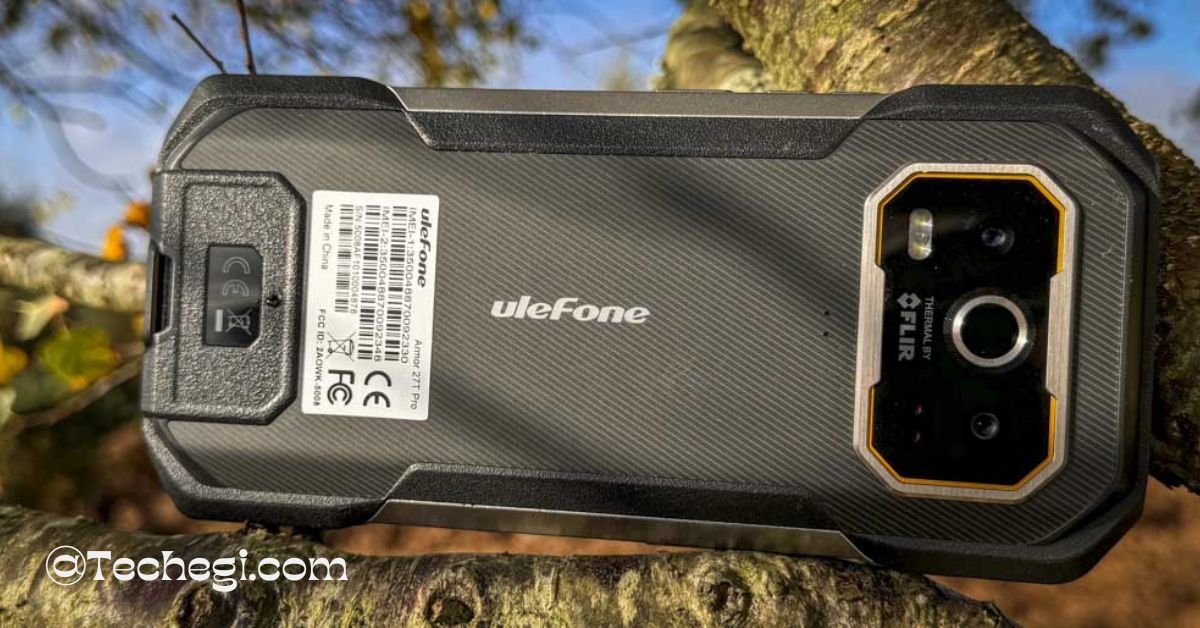
Two models currently drawing attention in this category are the Ulefone Armor 25T Pro and Ulefone Armor 27T Pro. Both devices promise durability, long battery life, thermal imaging, and 5G connectivity. However, they are designed for slightly different users.
In this Ulefone Armor 25T Pro VS 27T Pro review, we take a deep, side-by-side look at design, performance, battery life, camera capabilities, thermal imaging, network compatibility in the USA, and real-world usability. This comparison is written to help you confidently decide which rugged phone best fits your needs.
Ulefone Armor 25T Pro VS 27T Pro – Design and Build Quality
Rugged Construction and Durability
Both phones are engineered to survive harsh environments and meet strict durability standards. Each device is certified with IP68 and IP69K, meaning they are resistant to dust, dirt, and high-pressure water jets. They can also survive submersion in water for extended periods.
Additionally, both models comply with MIL-STD-810H, a U.S. military standard that tests resistance to drops, vibrations, humidity, extreme temperatures, and shocks. This makes both phones reliable choices for job sites, hiking trails, industrial work, and outdoor adventures.
For users who prioritize durability above all else, either phone delivers excellent protection comparable to other top rugged devices reviewed on Best rugged smartphones for outdoor work.
Size, Weight, and Handling
While both devices are rugged, they feel very different in the hand.
The Ulefone Armor 25T Pro is noticeably slimmer and lighter. It is easier to carry in a pocket or backpack and causes less fatigue during long workdays. This makes it a practical option for users who want rugged protection without excessive bulk.
The Ulefone Armor 27T Pro, on the other hand, is significantly thicker and heavier. This added weight is mainly due to its massive battery and expanded internal hardware. While less pocket-friendly, it feels extremely solid and built for endurance rather than portability.
In short, if comfort and mobility matter more, the 25T Pro has an advantage. If you prioritize endurance and power, the 27T Pro justifies its heavier build.
Display Comparison – Outdoor Visibility and Smoothness
Both smartphones feature a 6.78-inch display with a 120Hz refresh rate, which is impressive for rugged devices. The high refresh rate ensures smooth scrolling, fluid animations, and a responsive feel when navigating apps or browsing the web.
Outdoor Performance
The displays are designed to perform well in outdoor environments, offering strong brightness and good color reproduction even under direct sunlight. This is particularly important for users working outdoors or navigating trails, maps, and thermal imaging apps in bright conditions.
While neither display is AMOLED, both LCD panels provide reliable visibility, durability, and energy efficiency suitable for rugged use.
From a practical standpoint, there is no meaningful difference in display quality between the two models. Both deliver a solid viewing experience for work and entertainment.
Performance and Hardware – Day-to-Day Usability
Processor and Speed
Both phones are powered by the MediaTek Dimensity 6300 5G chipset, built on a 6nm process. This processor balances power efficiency with reliable performance, making it suitable for multitasking, navigation apps, work software, and moderate gaming.
In everyday use, both phones feel responsive. Apps open quickly, and basic multitasking is smooth. Neither device is aimed at hardcore gaming, but they handle casual games and productivity tasks without issues.
RAM and Storage Differences
This is where the two models begin to diverge significantly.
The Armor 25T Pro comes with 12GB of RAM, which is more than sufficient for most users. It handles multitasking well and provides stable performance for work and entertainment.
The Armor 27T Pro, however, offers a massive 24GB of RAM, positioning it as a powerhouse for heavy multitasking. This is particularly beneficial for users running multiple apps simultaneously, such as navigation, thermal imaging software, communication tools, and background services.
Both devices offer 256GB of internal storage, which is generous for storing photos, videos, maps, and work files. Storage expansion via TF card further enhances flexibility.
Battery Life – One of the Biggest Differences
Ulefone Armor 25T Pro Battery Performance
The 6,500mAh battery in the Armor 25T Pro delivers strong endurance. In real-world usage, it can easily last one and a half to two days with moderate to heavy use. This includes GPS navigation, calls, messaging, and occasional camera usage.
It supports 33W wired charging, 30W wireless charging, and reverse wireless charging, making it versatile for charging accessories or other devices. For users who want a balance between battery life and portability, this battery size is practical and efficient.
Ulefone Armor 27T Pro Battery Performance
The 10,600mAh battery in the Armor 27T Pro is the standout feature of this device. It can last two to three full days, even with heavy use. For outdoor workers, campers, and emergency responders, this level of endurance significantly reduces charging anxiety.
Despite the larger battery, charging speeds remain competitive, with 33W wired charging and 30W wireless charging support. For users comparing long-lasting rugged phones on long battery smartphones for outdoor use, the 27T Pro clearly stands out.
Camera System Comparison – More Than Just Numbers
Rear Camera Capabilities
Both phones share a similar rear camera setup, including:
- A 50MP main camera
- A 64MP night vision camera
- Thermal imaging capabilities
In good lighting conditions, both devices capture sharp and detailed photos. Colors are natural, and images are suitable for documentation, inspections, and casual photography.
Thermal Imaging Performance
Thermal imaging is one of the key reasons users consider these phones. The Armor 25T Pro offers a slightly wider measurable temperature range, which can be useful for specialized inspections.
The Armor 27T Pro, however, enhances the experience with additional software features that improve usability and accuracy during thermal analysis.
Thermal imaging professionals often reference tools like thermal imaging smartphones for professionals, and both models fit well into that category.
Front Camera and Video Recording
Both phones feature a 32MP front camera, suitable for video calls and selfies.
The major difference is video resolution:
- Armor 25T Pro: Front camera video up to 1080p
- Armor 27T Pro: Front camera video up to 2K
For users who frequently record video logs, virtual meetings, or field reports, the 27T Pro provides a noticeable upgrade.
Network and Connectivity in the USA
4G and 5G Band Support
Network compatibility is crucial for U.S. users.
The Ulefone Armor 27T Pro offers broader LTE and 5G band support, including LTE Band 71, which is essential for T-Mobile coverage, especially in rural and indoor areas.
The Armor 25T Pro lacks this band, making it less optimal for some U.S. carriers.
Best Choice for U.S. Users
For users on T-Mobile or global networks, the 27T Pro is the better option due to improved band support. However, both devices have limitations on certain AT&T and Verizon bands, so checking carrier compatibility is strongly recommended. For more insights, users often consult USA carrier compatibility for rugged phones before purchasing.
Rugged Features and Extra Tools
Both phones include:
- NFC for payments and access control
- Customizable side buttons
- SOS and emergency features
- uSmart expansion support (27T Pro only)
The uSmart Expansion Connector on the 27T Pro allows users to attach specialized accessories, making it more versatile for professional environments.
Software Experience and Android Version
Both devices ship with Android 14, offering a clean and modern interface. Ulefone keeps the software relatively close to stock Android, which improves stability and ease of use.
Security features, privacy controls, and productivity enhancements introduced in Android 14 are present on both models, ensuring a future-proof software experience.
Real-World Use Cases – Which One Fits You Better?
The Ulefone Armor 25T Pro is ideal for:
- Users who want a rugged phone without excessive weight
- Budget-conscious buyers
- Outdoor enthusiasts needing thermal imaging occasionally
- Users prioritizing portability
The Ulefone Armor 27T Pro is better for:
- Construction and industrial professionals
- Emergency responders
- Users needing maximum battery life
- Heavy multitaskers and power users
- Travelers requiring broader network compatibility
Price Comparison and Value for Money
The Armor 25T Pro is more affordable, offering excellent value for its features. It is a strong option for users who want rugged durability without paying a premium.
The Armor 27T Pro, while more expensive, justifies its price with:
- Larger battery
- Double the RAM
- Better camera features
- Expanded connectivity options
For users comparing value, resources like best rugged phones under budget often highlight the 25T Pro, while the 27T Pro is positioned as a premium rugged device.
Final Verdict – Ulefone Armor 25T Pro VS 27T Pro Review
In this Ulefone Armor 25T Pro VS 27T Pro review, both phones prove to be reliable, durable, and feature-rich rugged smartphones. Choose the Ulefone Armor 25T Pro if you want a lighter, more affordable rugged phone with solid battery life and thermal imaging.
Choose the Ulefone Armor 27T Pro if you need extreme battery endurance, advanced camera features, more RAM, and better network support in the USA. Both devices excel in durability, but the right choice depends on how demanding your daily usage is.