
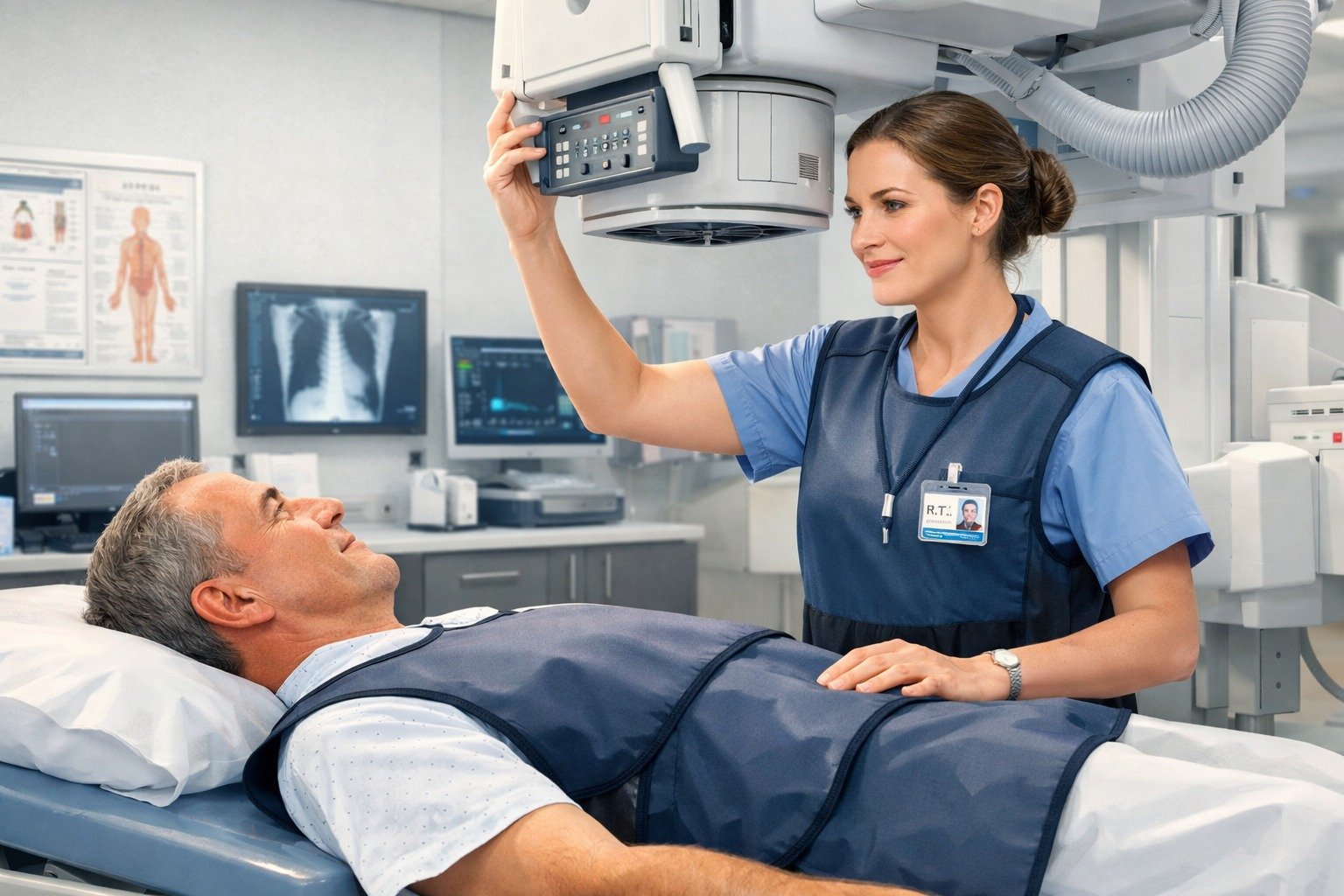
Radiology tech certification is a professional credential that confirms a radiologic technologist is qualified to safely perform diagnostic imaging procedures such as X-rays. It is awarded by the American Registry of Radiologic Technologists (ARRT) after completing an accredited education program and passing a national exam.
This certification is required or strongly preferred by most U.S. employers and states because it ensures high standards of patient care, radiation safety, and imaging accuracy.
Stay tuned with us, as we will dive deep into everything you need to know about radiology tech certification, from requirements and costs to career benefits and exam tips!
What Is Radiology Tech Certification?
Radiology tech certification is a professional credential that confirms a technologist’s ability to perform diagnostic imaging procedures safely, accurately, and ethically. It verifies that the individual has completed formal education, hands-on clinical training, and a standardized national examination. The purpose of certification is to protect patients while maintaining consistent imaging quality across healthcare facilities.
In the United States, the primary organization responsible for radiology tech certification is the American Registry of Radiologic Technologists (ARRT). ARRT establishes national standards for education, ethics, examination, and continuing education. When candidates meet these requirements and pass the certification exam, they earn the R.T.(R) credential, which stands for Registered Technologist in Radiography.
This credential is widely recognized by hospitals, diagnostic imaging centers, outpatient clinics, and state licensing boards. Employers rely on ARRT certification as proof that a radiologic technologist understands radiation safety, patient positioning, image production, and professional conduct. In many states, ARRT certification is not only preferred but legally required to work in the field.
How to Get Radiology Tech Certification
Earning radiology tech certification follows a structured pathway that combines academic education with practical clinical experience. The first step is enrolling in and completing an approved educational program in radiography or a closely related discipline.
Most students choose an associate degree in radiologic technology, which typically takes about two years to complete. Others pursue a bachelor’s degree, especially if they plan to advance into leadership roles, education, or specialized imaging fields later in their careers. Both degree options qualify for certification as long as the program is ARRT-approved.
ARRT-approved programs include classroom instruction in areas such as anatomy, radiation physics, imaging procedures, and patient care. Equally important is clinical training, which places students in real healthcare environments under professional supervision. During clinical rotations, students gain hands-on experience performing imaging exams, interacting with patients, and operating radiologic equipment safely.
After graduating, candidates must apply for the ARRT exam and complete an ethics review. Successfully passing the exam results in official radiology tech certification, allowing technologists to use the R.T.(R) credential and pursue employment or state licensure.
Requirements for ARRT Radiology Tech Certification
ARRT radiology tech certification requirements are designed to ensure that all certified technologists meet consistent professional and ethical standards. Educational eligibility is the foundation of the process. Candidates must complete a radiography program that is accredited and recognized by ARRT. A high school diploma or equivalent is required before entering the program.
Ethics also play a major role in certification. ARRT requires candidates to demonstrate honesty, professionalism, and good moral character. Applicants must disclose any past legal issues, disciplinary actions, or professional misconduct. These disclosures are reviewed individually, with an emphasis on transparency rather than automatic disqualification.
In addition to ARRT requirements, state licensing rules may apply. While certification is national, licensure is regulated at the state level. Some states automatically grant licenses to ARRT-certified technologists, while others require additional applications, fees, or documentation. Understanding both certification and licensing requirements is essential before entering the workforce.
How Long Does It Take to Get Radiology Tech Certification?
The time needed to obtain radiology tech certification depends largely on the education path you choose. For most students, the full process takes two to four years from start to finish. An associate degree program typically requires about 24 months, including both classroom instruction and clinical training.
Bachelor’s degree programs usually take closer to four years but may provide broader career opportunities, especially in leadership or advanced imaging roles. After graduation, candidates often spend several weeks or months preparing for the ARRT exam before scheduling their test.
The fastest route to certification is enrolling full-time in an accredited associate degree program and completing all clinical requirements on schedule. While accelerated options exist in limited situations, the hands-on nature of radiologic training means the process cannot realistically be shortened beyond two years without affecting competency.
How Much Does Radiology Tech Certification Cost?
The cost of radiology tech certification includes education expenses, examination fees, and other professional costs. Tuition varies significantly depending on the type of institution and geographic location. Community colleges often charge between $5,000 and $10,000, while private colleges or university programs may exceed $20,000.
ARRT charges an exam fee of approximately $225, which is paid when applying for certification. Additional expenses may include textbooks, uniforms, background checks, drug screenings, and clinical insurance. State licensing fees may also apply after certification.
Typical Cost Breakdown
| Expense Category | Estimated Cost Range |
|---|---|
| Education Tuition | $5,000 – $20,000 |
| ARRT Exam Fee | ~$225 |
| Books & Supplies | $500 – $1,500 |
| State Licensing Fees | $50 – $300 |
Although the upfront costs can seem high, radiology tech certification is widely considered a strong return on investment due to steady demand, competitive salaries, and long-term career stability.
Is Radiology Tech Certification Required to Work in the U.S.?
In most cases, radiology tech certification is required to work legally in the United States. Around 38 states mandate certification or licensure based on ARRT standards. Even in states where certification is not legally required, most employers strongly prefer or require it.
Certification demonstrates that a technologist understands radiation safety, ethical patient care, and standardized imaging practices. Hospitals and imaging centers rely on certified staff to meet accreditation standards and minimize liability risks.
In states without strict certification laws, certified technologists still enjoy clear advantages, including better job opportunities, higher pay, and greater career mobility compared to non-certified workers.
How Difficult Is the Radiology Tech Certification Exam?
The ARRT radiology tech certification exam is considered moderately challenging, but it is achievable with proper preparation. The exam consists of approximately 200 questions and lasts about four hours. It evaluates both theoretical knowledge and applied clinical skills.
Key subject areas include patient care, radiation protection, image production, imaging procedures, and equipment operation. Many questions are scenario-based, requiring candidates to apply their knowledge rather than rely on memorization.
Success on the exam depends on consistent study, strong clinical experience, and familiarity with the exam format. Many candidates use review courses and practice exams to build confidence before testing.
Can You Get Radiology Tech Certification Online?
Radiology tech certification cannot be completed entirely online. While some coursework may be offered through online or hybrid programs, in-person clinical training is mandatory. ARRT requires hands-on experience in approved healthcare settings to ensure patient safety and professional competency.
Programs that claim to offer full certification without clinical training should be approached with caution. Legitimate programs clearly outline their in-person requirements and maintain proper accreditation. Online learning can offer flexibility, but it must be combined with supervised clinical practice to meet certification standards.
Radiology Tech Certification vs State License
Radiology tech certification and state licensure serve different but closely connected purposes. Certification is a national credential awarded by ARRT, while licensure is a legal authorization issued by individual states.
Many states use ARRT certification as the foundation for licensure, meaning passing the ARRT exam simplifies the licensing process. Working without certification can limit employment options and may require additional state-specific exams or training.
How to Renew Radiology Tech Certification
Radiology tech certification must be renewed every two years. ARRT requires technologists to complete 24 continuing education (CE) credits during each renewal cycle. These credits help professionals stay current with new technologies, safety standards, and best practices in medical imaging.
Renewal also includes ongoing compliance with ARRT’s ethics standards. Failing to renew on time can result in inactive certification status, which may affect employment eligibility and state licensure.
Does Radiology Tech Certification Increase Salary?
Radiology tech certification often leads to higher salaries and improved job stability. Certified technologists are more competitive in the job market and qualify for specialized imaging roles that typically pay more than entry-level positions.
Certification also supports long-term career growth. Technologists with credentials are more likely to move into supervisory roles, management positions, or advanced imaging specialties with higher earning potential.
Specialties You Can Pursue After Radiology Tech Certification
After earning radiology tech certification, professionals can expand their careers by specializing in advanced imaging fields. CT and MRI technologists focus on cross-sectional imaging, while mammography technologists specialize in breast imaging and cancer detection.
Interventional radiology involves assisting with minimally invasive procedures guided by imaging, and nuclear medicine focuses on functional imaging using radioactive tracers. These specialties often require additional certification but offer expanded responsibilities and higher pay.
Radiology Tech Certification by State (Example: Indiana)
Indiana requires radiologic technologists to obtain state licensure, which is closely linked to ARRT certification. Applicants must complete an accredited program, pass the ARRT exam, and apply through the Indiana State Department of Health.
Additional requirements may include background checks, application fees, and periodic renewals. This example highlights the importance of reviewing state-specific regulations before beginning a radiology career.
Frequently Asked Questions About Radiology Tech Careers
1. Is radiology tech certification worth it long term?
Yes, certification offers job security, professional credibility, and access to higher-paying roles.
2. Can international students earn radiology tech certification?
Yes, if they complete an ARRT-approved program and meet all eligibility requirements.
3. What happens if you fail the ARRT exam?
You can retake the exam, but ARRT limits the number of attempts within a specific time period.
4. Does certification expire if you stop working?
No, as long as you meet continuing education requirements and renew on time.
5. Can certification help you move between states?
Yes, national certification makes it easier to transfer or obtain state licensure.
Conclusion
Radiology tech certification is a critical step toward a stable and respected career in medical imaging. It validates professional skills, promotes patient safety, and opens doors to a wide range of job opportunities across the healthcare system. From education and exams to renewal and specialization, certification provides structure and credibility throughout a technologist’s career.
For anyone serious about working in radiography, earning and maintaining certification is more than a requirement—it is an investment in long-term success. By understanding the process early, aspiring technologists can plan confidently and build a rewarding future in one of healthcare’s most essential professions.
Also Read: