
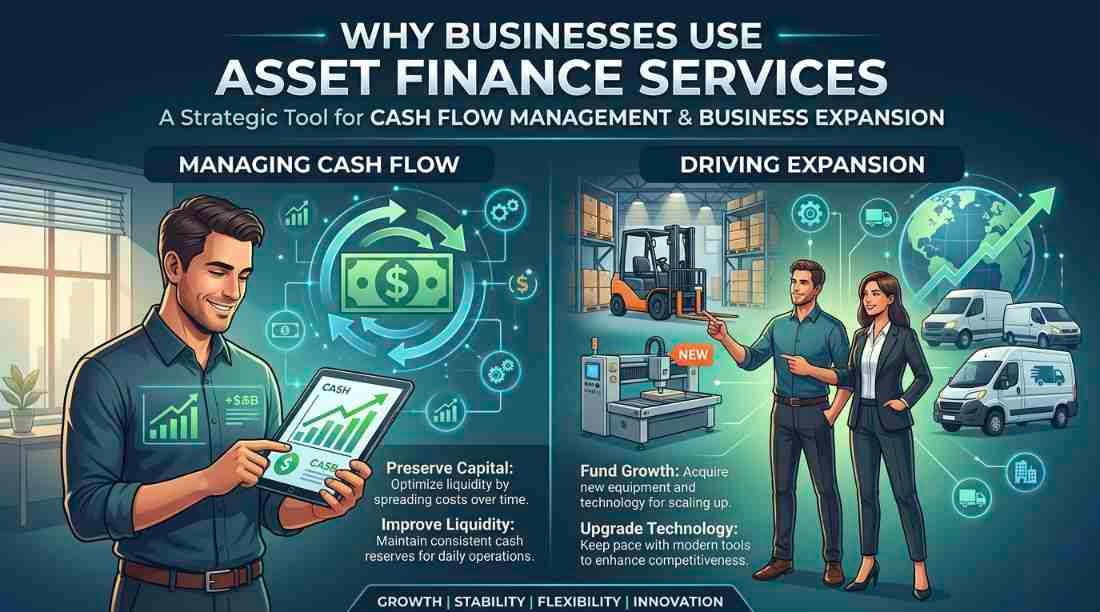
Running a business often comes down to making smart financial decisions. Whether you’re a small startup or an established company, one of the biggest challenges is balancing growth with financial stability. Businesses need equipment, vehicles, and technology to operate efficiently—but paying for these assets upfront can put pressure on cash flow.
This is where asset finance services come into play. Instead of making large one-time purchases, businesses can spread the cost of essential assets over time. This approach helps preserve working capital while still allowing companies to invest in growth.
Understanding how asset finance works can help business owners make more informed decisions and build a stronger financial foundation.
What Are Asset Finance Services?
Asset finance services are financial solutions that allow businesses to acquire equipment, vehicles, or machinery without paying the full cost up front. Instead, the business pays for the asset over time through structured repayments.
This type of financing is commonly used across industries. For example, a construction company may finance heavy machinery, while a logistics business might finance delivery trucks. Even small businesses, such as cafés and retail shops, use asset finance to purchase equipment, such as coffee machines and point-of-sale systems.
At its core, asset finance is about access. It allows businesses to use the tools they need immediately while managing payments that align with their revenue.
The concept is closely related to asset management, which involves strategically acquiring and using assets to maximize value and efficiency.
Rather than tying up large amounts of capital in equipment, businesses can allocate resources more effectively across different areas of operation.
Supporting Cash Flow and Day-to-Day Operations
Cash flow is one of the most important aspects of running a business. Even profitable companies can face challenges if they don’t have enough cash available to cover daily expenses.
For example, a growing landscaping business may need new tools and vehicles to handle more clients. Paying for all this equipment upfront could strain the business’s finances, leaving less cash available for wages, fuel, or marketing.
Asset finance provides a solution by spreading costs over manageable payments. This allows businesses to maintain steady cash flow while still accessing the equipment they need.
Consider a restaurant upgrading its kitchen equipment. Instead of spending a large sum all at once, the business can finance the equipment and pay for it gradually. This keeps more cash available for inventory, staffing, and day-to-day operations.
In many ways, this approach works similarly to how individuals finance large purchases, such as homes or vehicles. It allows for better financial planning and reduces immediate financial pressure.
By maintaining healthy cash flow, businesses are better positioned to handle unexpected expenses and take advantage of new opportunities.
Enabling Business Growth and Expansion
Growth often requires investment. Whether it’s expanding operations, entering new markets, or increasing production capacity, businesses need access to the right tools and resources.
Asset finance plays a key role in supporting this growth.
For example, a delivery company looking to expand its service area may need additional vehicles. Instead of waiting until enough capital is saved, the company can finance the vehicles and start generating revenue sooner.
Similarly, a manufacturing business may need new machinery to increase production. Financing allows the company to upgrade equipment without delaying growth plans.
This ability to act quickly can provide a competitive advantage. Businesses that can invest in the right assets at the right time are often better positioned to capture market opportunities.
Another example is a fitness center expanding its services. By financing new gym equipment, the business can attract more customers and increase revenue without a large upfront investment.
For businesses exploring ways to fund equipment or vehicle purchases while supporting growth, solutions like asset finance services in Australia offer insights into how structured financing can align with business goals.
Access to flexible financing options enables businesses to scale operations without compromising financial stability.
Flexibility Across Different Industries
One of the strengths of asset finance is its flexibility. It can be adapted to suit a wide range of industries and business models.
For example:
- Construction companies use asset finance to acquire heavy equipment such as excavators and cranes.
- Healthcare providers finance medical equipment to ensure they can offer modern services.
- Transportation businesses rely on financing to build and maintain vehicle fleets.
- Retail stores use it to invest in fixtures, technology, and inventory systems.
Each of these industries has unique needs, but they all benefit from the ability to access essential assets without high upfront costs.
Even freelancers and small business owners can benefit from asset finance. For instance, a photographer might finance high-end camera equipment, allowing them to take on more professional projects.
This flexibility makes asset finance a valuable tool for businesses of all sizes.
Managing Risk and Staying Competitive
Another important benefit of asset finance is its role in risk management. Investing a large amount of capital into a single purchase can be risky, especially in industries where technology or market conditions change quickly.
For example, a company that purchases expensive equipment outright may face challenges if that equipment becomes outdated within a few years.
With asset finance, businesses can manage this risk more effectively. Financing arrangements often allow for upgrades or replacements, helping companies stay competitive with newer technology.
This is particularly important in industries such as manufacturing, healthcare, and technology, where innovation happens rapidly.
By spreading costs over time, businesses can avoid overcommitting their resources to a single investment.
Making Smarter Financial Decisions
Ultimately, asset finance is about making smarter financial decisions. It allows businesses to balance immediate needs with long-term goals.
Instead of depleting cash reserves, companies can maintain liquidity while still investing in growth.
For example, a startup launching a new product line may choose to finance equipment rather than use all available capital. This ensures they have funds available for marketing, staffing, and other essential activities.
Similarly, an established company may use asset finance to upgrade equipment while preserving cash for expansion into new markets.
This approach provides flexibility and supports strategic planning.
Building a Strong Foundation for Growth
Every business aims to grow, but sustainable growth requires careful financial management. Asset finance services provide a practical way to access essential equipment while maintaining healthy cash flow.
By spreading costs over time, businesses can invest in their operations without placing unnecessary strain on their finances.
Whether it’s purchasing vehicles, upgrading technology, or expanding facilities, asset finance allows companies to move forward with confidence.
In today’s competitive business environment, having the right tools at the right time can make all the difference. With thoughtful planning and the right financial strategies, businesses can continue to grow, adapt, and succeed over the long term.