
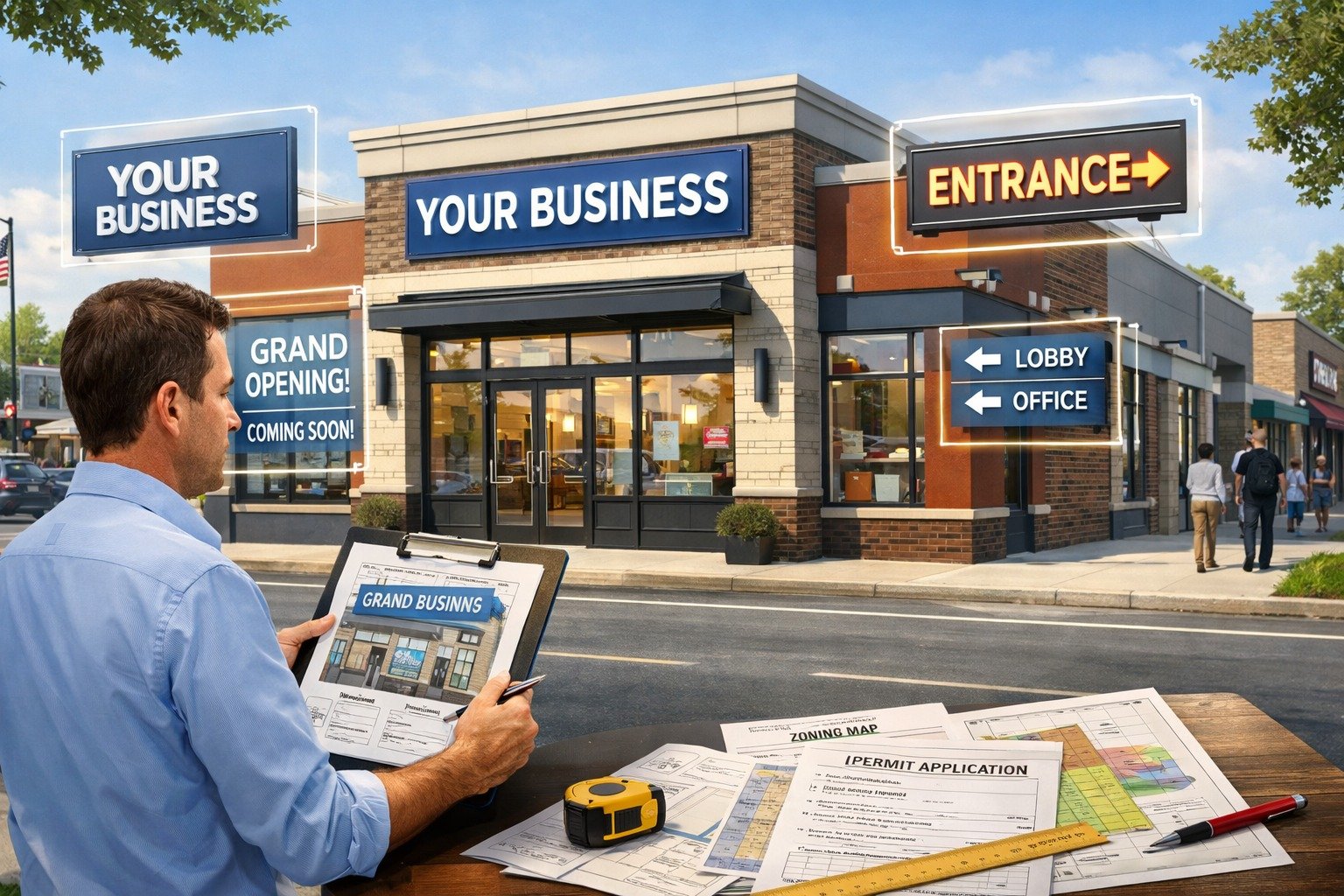
Opening a new business location involves dozens of decisions and signage planning should be one of the early ones. Many owners treat signages as a last-minute task. This can mostly lead to poor visibility, permit delays or extra costs. A clear plan from the beginning helps a business get noticed, guide customers properly and avoid unnecessary rework after opening.
This article explains how to plan signages step by step in a practical way.
Study the Location Before Making Any Decisions
Every location creates different signage needs. A storefront on a busy road will require a different approach than one inside a quiet plaza. Traffic speed, viewing distance and surrounding buildings all affect how a sign should look.
Walk around the area at different times of day. Check where people approach from and what blocks visibility. Trees, poles, parked vehicles and lighting conditions all influence readability. These observations help decide sign size, placement and lighting needs.
Ignoring the surroundings often results in signs that people miss.
Learn Local Rules and Approval Requirements Early
Maryland has signage regulations that vary by county and city. These rules cover sign size, placement, lighting type and mounting methods. Some locations also require design approvals before fabrication begins.
Permits can take time. Missing paperwork can delay opening dates. Early research avoids redesigns and rejected applications.
Working with a provider familiar with Maryland regulations helps navigate zoning rules and approval processes smoothly.
Decide the Purpose of Each Sign
Each sign should have one clear role. Trying to communicate too much on a single sign creates confusion.
Common purposes include:
- Helping customers find the business
- Showing entrances clearly
- Directing visitors inside the space
- Sharing hours or basic services
Exterior signages focus on visibility and identification. Interior signages focus on direction and clarity. Listing purposes before designing keeps messaging focused and effective.
Choose the Right Sign Types for the Space
Not every business needs every sign type. Selecting only what supports customer movement works better than filling space with graphics.
Common options include:
- Building signs for brand identification
- Window graphics for short messages
- Directional signs for navigation
- Temporary signs for opening promotions
Choose your sign types based on function rather than trends. Practical choices will reduce clutter and improve readability.
Focus on Readability During Design
A sign works only when people can read it quickly. Decorative elements should never overpower the message.
Effective design choices include:
- Simple fonts with enough spacing
- Strong contrast between text and background
- Short messages with clear meaning
- Consistent brand colors
People often view signs while walking or driving. Designs that respect limited attention perform better than complex layouts.
Select Materials Based on Environment
Material choice can affect how long signages last. Weather, sunlight and moisture all can cause wear over time.
Common materials include:
- Aluminum for outdoor conditions
- Acrylic for indoor displays
- Vinyl for windows and promotions
- Composite panels for controlled budgets
Each material fits specific uses. Choosing incorrectly leads to fading, warping, or early replacement.
Ask about expected lifespan and maintenance needs before finalizing materials.
Include Installation in the Planning Stage
Installation quality impacts both safety and appearance. Poor mounting causes alignment problems and structural risks.
Professional installation usually involves:
- Secure anchoring methods
- Proper electrical connections for lighting
- Level placement for visibility
- Compliance with building codes
Planning installation early prevents surprises on opening week. Local installers understand site conditions and building structures better.
Plan the Budget Beyond Fabrication Costs
Sign expenses include more than design and production. Permits, installation, lighting and maintenance add to the total cost.
You must request a detailed pricing upfront. Clear breakdowns help manage expectations and prevent last-minute budget stress.
Working with a sign company Maryland simplifies coordination across design, approval, and installation stages.
Think About Future Updates
Businesses grow and change over time. Services expand and promotions will rotate.
Flexible sign designs allow easy updates. Replaceable panels and modular layouts reduce long-term costs. Planning for future changes can avoid full replacements later.
Final Thoughts
Planning signages early helps new businesses avoid visibility problems and unnecessary expenses. Location research shapes design decisions. Local rules guide what is possible. Clear goals prevent clutter and confusion.
Thoughtful planning allows signages to work quietly every day, guiding customers and supporting growth without constant attention.
Also read: